Skip to content
  • About Me
  • My Books
  • Short Stories
  • The Expat’s Travel Guide
  • Ask the Author 2014
  • Ask the Author 2015
  • Privacy Policy

L.L. Diamond

  • King’s College Chapel – Cambridge

    September 26th, 2017

    If you’ve never been inside King’s College Chapel in Cambridge, then by all means go! We made an attempt two years ago, but we were told they’d changed the viewing hours to one day a week at that time and we were unable to see inside. This time, we travelled to Cambridge for a Jane Austen exhibit in the library, but traffic had us arrive too late. Fortunately, the chapel was still open and we decided to do that instead.
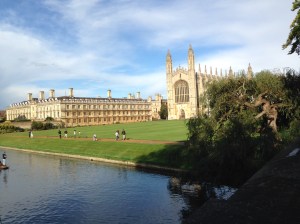
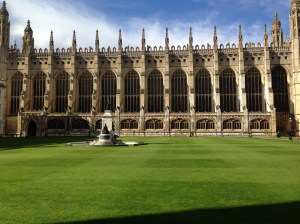
    Chapel from the River
    Side view of the exterior
    Down the centre of the chapel

    The initial building of King’s Chapel began on 25 July 1446 by Henry VI and took over one hundred years to finish. In the process, Henry flattened a good portion of what existed as Cambridge–houses, shops, and wharves–to clear enough land for the scale of the project. He wanted King’s College Chapel to be without equal in terms of its grandeur and beauty. There was supposed to be much more than the chapel by Henry’s plans. He desired more of a court, but he died before it could be completed, and despite instructions left in his will, only the chapel was built.
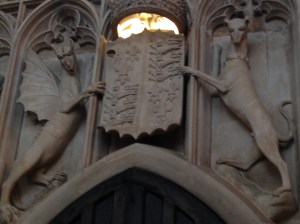
    Henry VII Coat of Arms
    Looking towards the congregation from near the altar
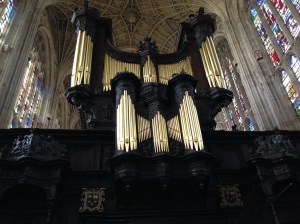
    Pipes for the organ

    King’s Chapel is an amazing example of Gothic (Perpendicular) architecture with the largest fan vault in existence. A great deal of the stained glass also dates to medieval times and if you look closely, you can see the difference between the older glass and the newer by the detail of the figures and faces.
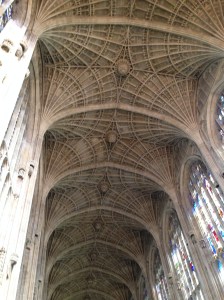
    Fan Vault
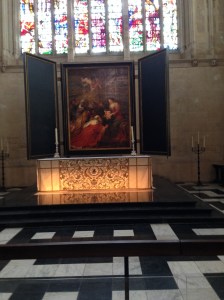
    Rubens “Adoration of the Magi”
    Stained Glass with the Fan Vault

    Carvings in the wall are all representative of the Tudors, from the Tudor Rose to the dragons and the greyhounds on Henry VII coat of arms. The greyhound represented Henry’s mother, who was a Beaufort, and the dragon the Tudors while a fleur de lis is present to represent his “titular kingship of France.”
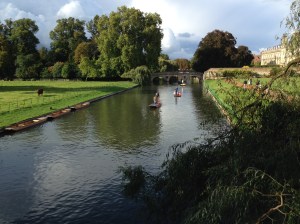
    View of the river from the Bridge
    Other view

    If you go, also don’t miss the Adoration of the Magi by Rubens on the altarpiece. The altarpieces in Europe have some amazing artwork and this one is no different. We also were able to walk the grounds after since it was an open day at the college. I definitely recommend it if you have the opportunity. Unfortunately, the other buildings are closed to the public.



    Sources:
    http://www.kings.cam.ac.uk/chapel/index.html
    http://www.kings.cam.ac.uk/chapel/history.html
    http://www.cam.ac.uk/research/features/going-to-the-dogs-the-500-year-old-greyhounds-of-kings-and-in-the-fight-against-cancer

    Share this:

    • Share
    • Tweet
    Like Loading…
  • Blog Tour Kick Off!

    September 7th, 2017

    Hi, everyone! I’ve been crazy busy getting Particular Attachments launched and I’m so excited to be starting the blog tour for it! I’ve got a fun schedule planned. It doesn’t just end on September 17th either! Not listed below are a review at Austenesque Reviews either later this month or in October, a guest post with Madame Gilfurt on October 2nd, and review at Obsessed by Mr Darcy in early October. I hope you’ll join me for each stop. There’s going to be something new with each blog 🙂 OH! And if you haven’t pre-ordered your copy yet, make sure you do so it’s on your e-reader on release day. The special price of $3.99 is only until release day!

    Happy Reading!


    Share this:

    • Share
    • Tweet
    Like Loading…
  • West Stow Anglo-Saxon Village

    August 8th, 2017

    West Stow Anglo-Saxon Village is an archeological site and museum dedicated to the artefacts and culture found in that area of Suffolk. There is evidence that people lived here as far back as the Mesolithic period, approximately 11,600 years ago, and that people have inhabited the area off and on throughout the ages.

    In 1849, people became interested in the site and was excavated in the 18th and 19th centuries as well as a more recent excavation between 1956 and 1972. The majority of the structures that were once on this site were called sunken-feature buildings. There were also a great deal of coins as well as pottery found on the site. The museum displays some of these artefacts as well as others that they have found in nearby areas of Suffolk.

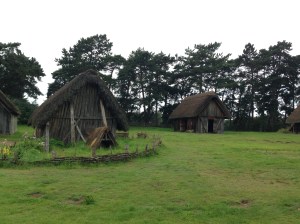
    Replicas
    Replica
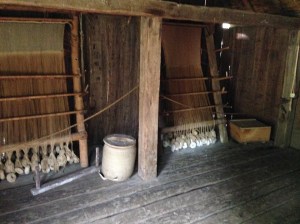
    Inside the replica of the weavers hut

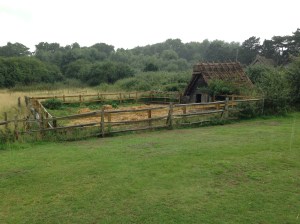
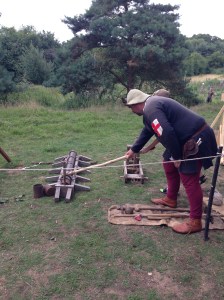
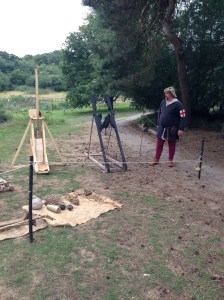
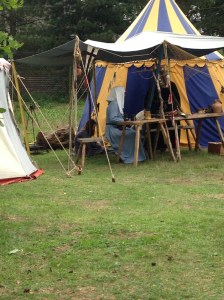
    On the site now is a series of approximately seven buildings built by researchers in an effort to determine how the Anglo-Saxons built their dwellings as well as what kind of buildings they used. There are also replicas of the weapons used from the earliest times to the medieval times and re-enactments as a part of the tour, including everything from slingshots, to trebuchets, to gonnes, which were medieval hand cannons.

    lighting the gonne
    re-enactment of the trebuchet
    more re-enactors

    The area also comprises of 125 acres with trails, countryside, heath, which has purple heather on it right now, and walks to explore. There is also a playground, picnic area, and a cafe.


    Sources:
    https://www.weststow.org
    http://news.bbc.co.uk/local/herefordandworcester/hi/people_and_places/music/newsid_9081000/9081966.stm
    http://www.buryfreepress.co.uk/news/rotting-west-stow-house-reveals-anglo-saxon-builders-secrets-1-7008124
    http://www.stedmundsbury.gov.uk/leisure/parks/weststow.cfm?aud=visitor
    https://en.wikipedia.org/wiki/West_Stow_Anglo-Saxon_Village

    Share this:

    • Share
    • Tweet
    Like Loading…
  • Melford Hall

    July 18th, 2017

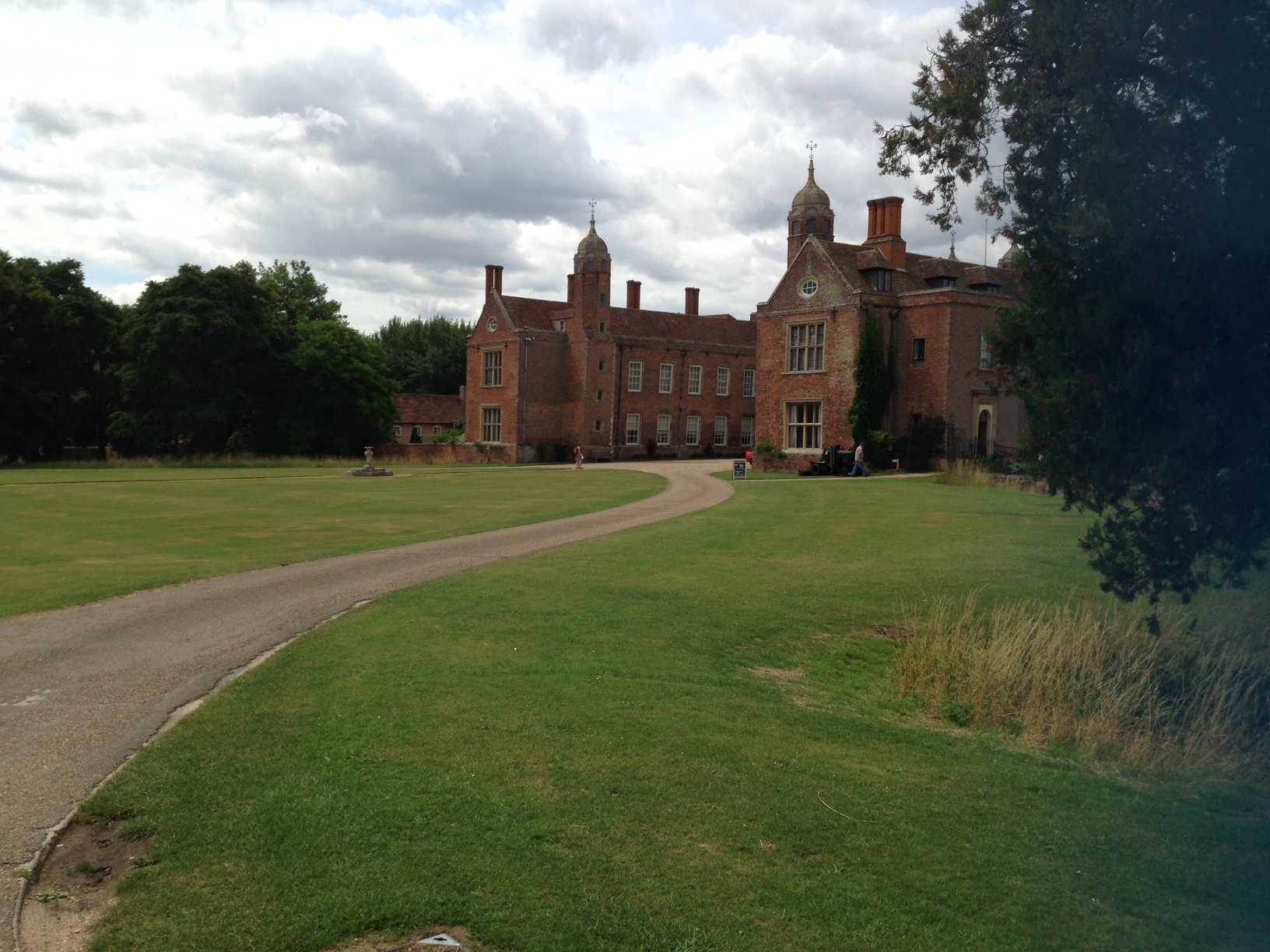
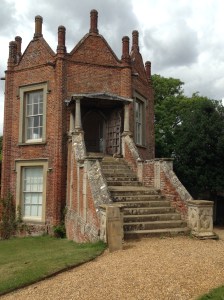
    If you like Beatrix Potter, you might just find Melford Hall to be right up your alley. Built in the 16th century, Melford Hall was originally held by abbots until the dissolution of the monasteries when it was granted to William Cordell. It was passed and sold within the Cordell family until 1786, when it was sold to Harry Parker, the son of Admiral Hyde Parker and became the seat of the Parker baronetcy. The home was passed to the National Trust in 1960. The family still occupies a wing and some of the gardens by lease.

    Beatrix Potter was a much-loved cousin of the Parkers and visited often after 1890. She was said to have brought mice and other creatures with her that she painted as well as painting or making pen and ink drawings of the house and gardens, which are on display in a small outbuilding as well as within the house itself. There is also a model of Jemima Puddle-Duck that she gifted the Parker children on one of her visits.

    Along with the artwork, you can tour the room where Beatrix Potter stayed as well as many other rooms in the home. There is a small garden to the rear of the house that is tended by the National Trust and open to visitors as well as a small lawn to one side where there is seating for the tea room and room for people to play croquet. The National Trust also provides picnic blankets and Beatrix Potter themed toys for children to enjoy on the lawn as well.

    The house is lovely, though more modern in some ways than others. There are current photographs of the family around the house, which you don’t see in many of the other National Trust homes, and some of the furniture is more modern since family resided in many of the rooms toured until the ’60’s.

    If you’re near Long Melford in Suffolk, Melford Hall is definitely worth a look–especially if you’re a Beatrix Potter fan.

    Sources:
    https://www.nationaltrust.org.uk/melford-hall
    https://en.wikipedia.org/wiki/Melford_Hall
    http://heartofsuffolk.co.uk/visitor-information/melford-hall-long-melford/

    Share this:

    • Share
    • Tweet
    Like Loading…
  • Sources of Inspiration: Idioms

    July 13th, 2017

    When I first started writing Rain and Retribution, I didn’t think much about some of the phrasing I was using until my first beta tagged a phrase and asked, “When was this first used?” Wait, what? I never thought about some of the idioms or word phrases we might use on a daily basis and whether they were around in the time period I was writing. Now, I tend to catch myself as those pop into my head and I search them out and sometimes look for lists of fun phrases that would be more common during that time. Today, as I was editing a chapter, I looked up an idiom because I couldn’t remember if I’d checked it, and thought I would write a post with a couple of idioms I’ve had to check or that I’ve used just for fun.

    Today’s idiom was “to turn up like a bad penny.”  This actually comes from a proverb – “A bad penny always turns up,” and refers to anything or situation that is unwanted but recurs.

    While we don’t consider pennies worth much, in the Middle Ages, they were worth significantly more and people counterfeited pennies, but instead of throwing them away, people would try to spend them to get rid of them. The term “bad penny” actually goes back further than the 14th century and can be dated by a poem by William Langland. In Piers Plowman, it says “Men may lykne letterid men… to a badde peny.

    By the 18th century, the proverb appeared in Henry Fielding’s translation of Aristophanes Plutus (“We have a Proverb in English not unlike it, a bad Penny.”)


    One of my favourites that I like to use is “different as chalk and cheese,” which is simply saying that things are extremely different. “Like chalk and cheese” dates back to the 14th century and found in John Gower’s Confessio Amantis, published in 1390, “Lo, how they feignen chalk for chese.” The origin has never been really discovered, but given the date it was first used in writing, it’s safe to say it was used in Regency England. I’ve even heard it used in the England today.


    Sources:
    http://www.phrases.org.uk/meanings/a-bad-penny-always-turns-up.html
    https://english.stackexchange.com/questions/212498/old-timers-referring-to-a-bad-penny
    http://www.phrases.org.uk/meanings/chalk-and-cheese.html

    Share this:

    • Share
    • Tweet
    Like Loading…
  • Particular Attachments has a Release Date!

    July 10th, 2017

    I’ve been getting asked and I haven’t had an answer. Too many things were up in the air. I’ve been writing the story posting at Austen Variations, I hadn’t finished Particular Attachments, and I wasn’t sure if I was going to have to search out an editor! I finished and I was still superstitious about saying a release date out loud, but after a few things going my way, I decided to bite the bullet.

    My editor is plugging steadily away despite the rigours of having a new baby, and I am starting the formatting as I get chapters back from her. I also have a pretty substantial blog tour (for me anyway) getting lined up around that release date. So when is this release date you ask? Mark your calendars because September 14th is the date!

    I am super-duper excited and I hope you are too!

    Thanks for reading!


    Leslie xx

    Share this:

    • Share
    • Tweet
    Like Loading…
  • Sources of Inspiration: Artists as Modistes – Adélaïde Labille-Guiard

    July 6th, 2017

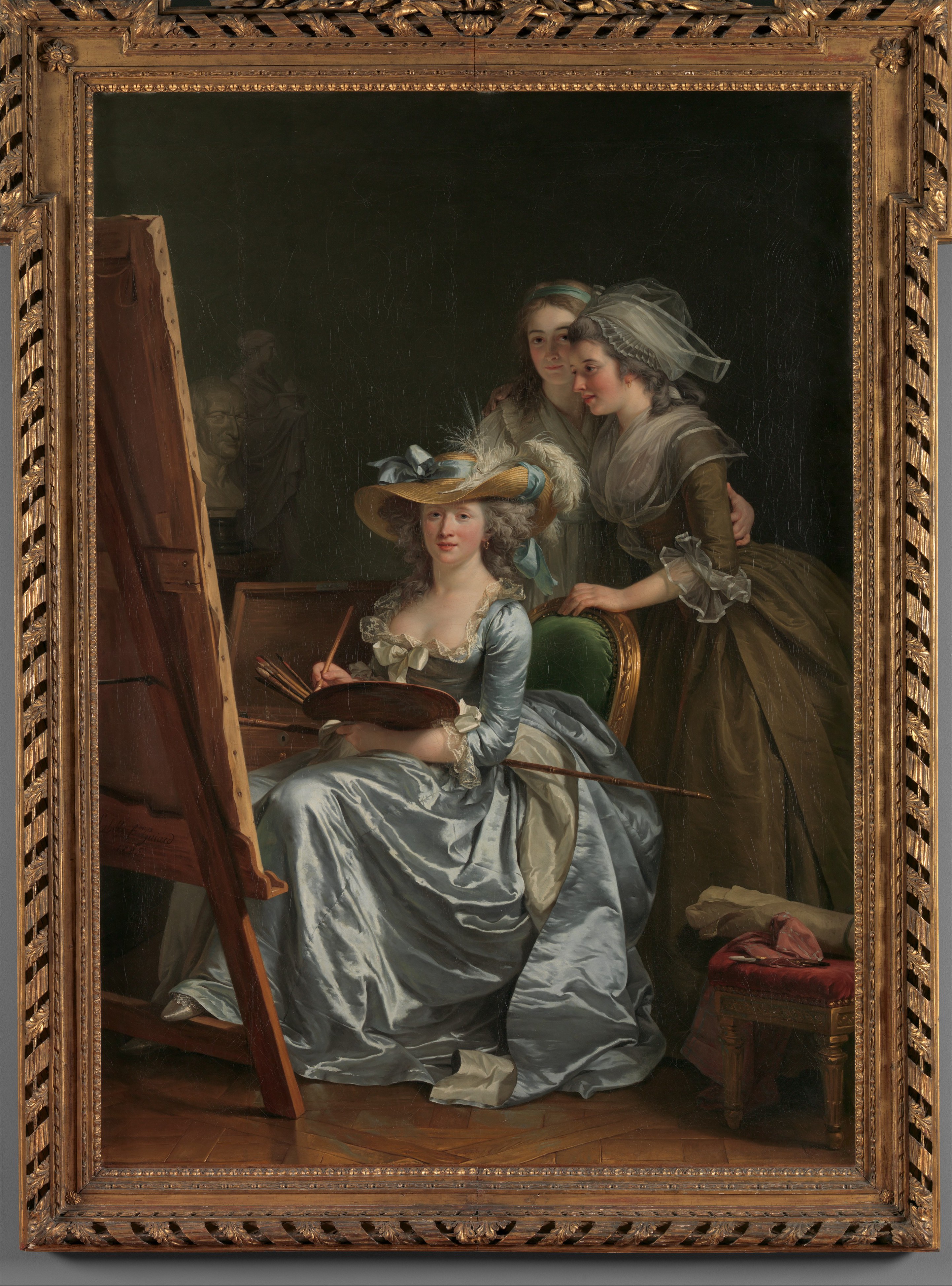
    In my Regency novels, I have a lot of fun naming characters, but one of my favourites is naming the modistes for great female artists. I’ve used Lebrun, duParc, and in Particular Intentions and its sequel, Madame Guiard for the portraitist Adélaïde Labille-Guiard.

    Adélaïde Labille-Guiard (French, Paris 1749–1803 Paris)
    Self-Portrait with Two Pupils, Marie Gabrielle Capet (1761–1818) and Marie Marguerite Carreaux de Rosemond (died 1788), 1785
    Oil on canvas; 83 x 59 1/2 in. (210.8 x 151.1 cm)
    The Metropolitan Museum of Art, New York, Gift of Julia A. Berwind, 1953 (53.225.5)
    http://www.metmuseum.org/Collections/search-the-collections/436840

    Adélaïde Labille was born in 1749 and was the daughter of a Paris shopkeeper (Coincidentally, her father owned a fashion boutique 🙂  ). She first studied as a miniaturist before joining the Académie de Saint-Luc or the Paris Guild in 1774, and later studied history paintings and portraits. In 1783, she was admitted to the Académie Royale de Peinture et de Sculpture and was later awarded the title Peintre des Mesdames (painter to the king’s aunts), an apartment at the Louvre, and a government pension of 2,000 lives.

    She continued to show at the Salon through the French Revolution, and unlike her contemporary, Elisabeth Vigee-Lebrun, she supported the French Revolution and remained in not only France, but kept to Paris for a long time. However, the new regime closed down the Académie Royale and banned women from joining the groups that succeeded it. She was also ordered to destroy some of her “royalist” works. She then waited out the remainder of the Terror in the countryside with her partner François-André Vincent and her student, Marie Gabrielle Capet.

    Despite her exclusion from the French art world, Labille-Guiard continued to show, even though she received little notice after her exclusion from the Académie. Throughout her career Labille-Guiard used her experience and talent to train aspiring female artists and was no doubt a great influence with her talent and her ambition. She died in 1803.


    Sources:
    http://www.metmuseum.org/toah/hd/lagui/hd_lagui.htm
    https://nmwa.org/explore/artist-profiles/adélaïde-labille-guiard
    https://en.wikipedia.org/wiki/Adélaïde_Labille-Guiard
    http://harvardmagazine.com/2009/09/adelaide-labille-guiard

    Share this:

    • Share
    • Tweet
    Like Loading…
  • Winchester

    July 4th, 2017

    During Jane Austen Regency Week several years ago, a group of us drove out to Winchester hoping to go inside the cathedral and pay our respects to Jane. Little did we know there is a flower show held ever other year at the cathedral and it was closed down the day we went to set up. I wanted to go again, but never made it back until this year. This year would normally be the year the flower show was held in Winchester, but I suppose the 200th anniversary of Jane’s death changed things a bit. Instead, the cathedral and all of Hampshire are celebrating Jane Austen.

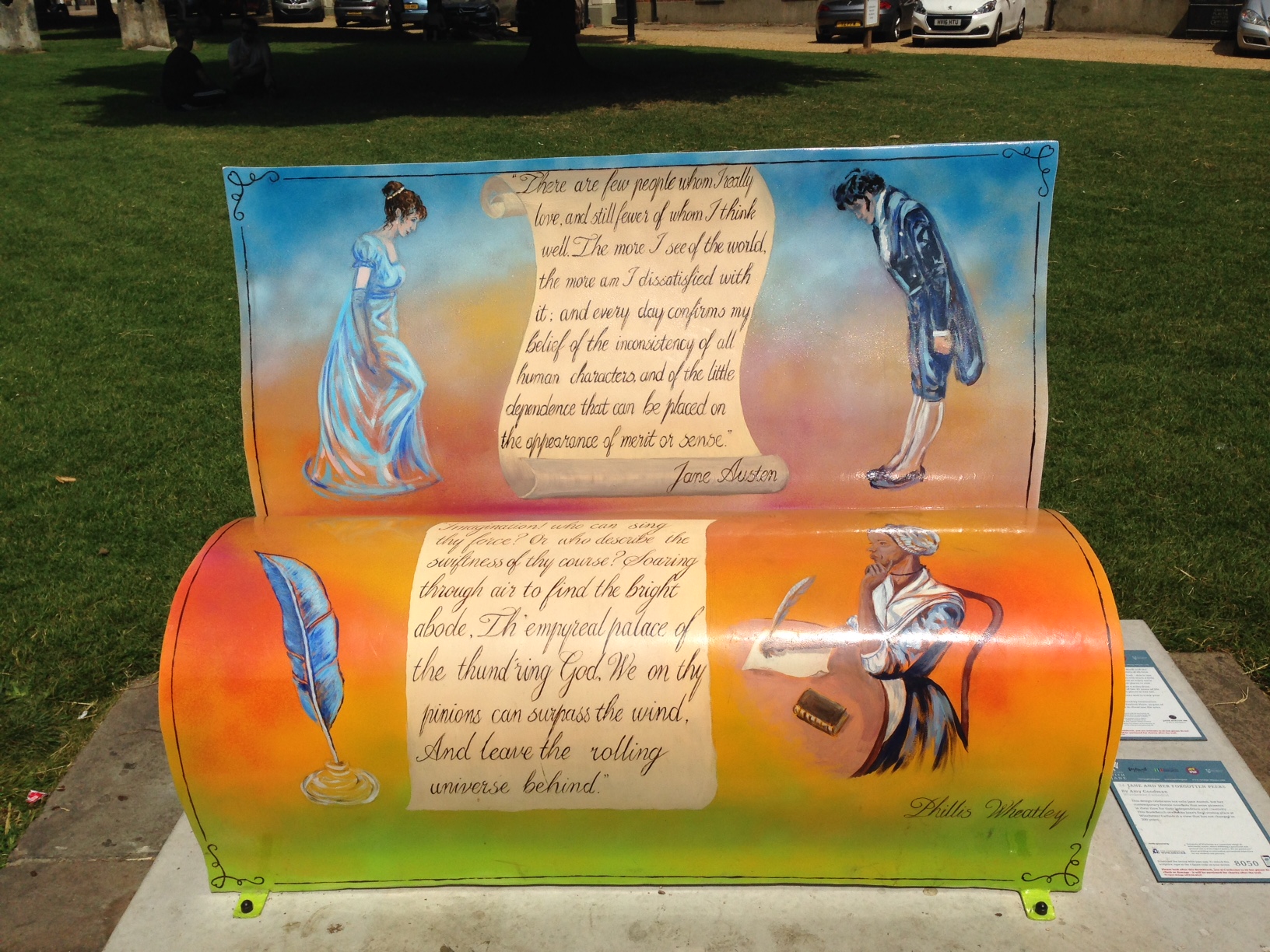
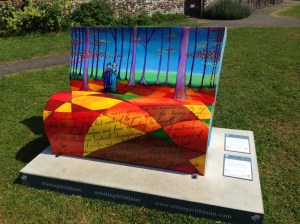
    I wish the weather had been cooler, but all of England was sweating out a heat wave for that entire week, and that Wednesday was no different. Intending to also go to the Mysterious Miss Austen exhibit, my daughter and I decided to go to the cathedral first since it was the closest. We stopped by the book bench in front of the cathedral first so I could snap a quick photo.

    When we entered the cathedral, much to my surprise, my daughter was free because she is under 16 and with family. She’s at an age where she is rarely free or even reduced. She is still a student, so it’s always nice that something educational is made more affordable. 🙂

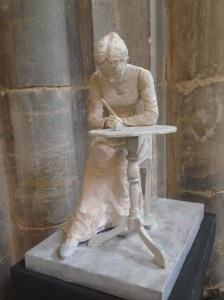
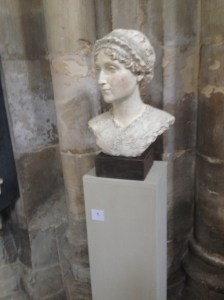
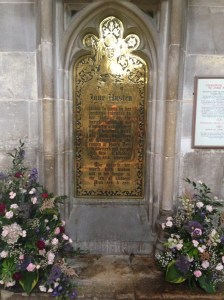
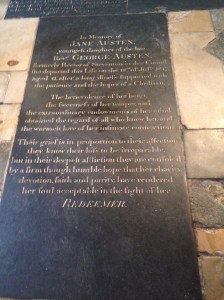
    The greeters at the cathedral handed us a brochure with the best parts of the building labelled, and told us where to begin. Fortunately, Jane Austen’s grave is one of the first parts, though we had to wait for a tour to finish to actually stand close by. There are sculptures nearby and infographics that are well done and interesting, so we weren’t completely bored. Not to mention that the cathedral is beautiful and one of the most spectacular I’ve seen so far.

    For people to leave messages
    Plaque added later
    Jane Austen’s Grave

    A book was nearby where fans of Jane Austen could write a note, and I contributed–even though I tend to struggle for what to write. One of the entries on the page was simply, “You changed me forever.” which made me tear up. Jane Austen changed the lives and attitudes of so many and she never knew the influence her words had. I do think she’d be touched, but find a lot of things in honour of her a bit of a lark.

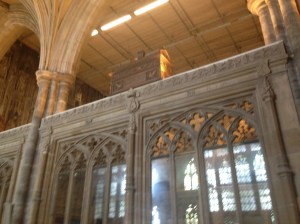
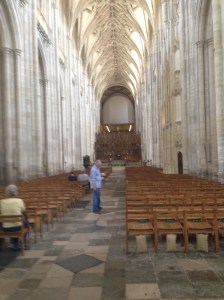
    Winchester Cathedral is definitely a must see from the amazing ceiling to the graves of kings and queens on a wall near the altar. I wish we’d had more time to spend, but we were to drive home that day and I had to be there by a certain time.

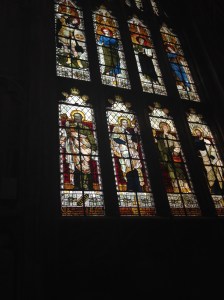
    Gorgeous stained glass
    Remains of Kings and Queens
    Down the centre.

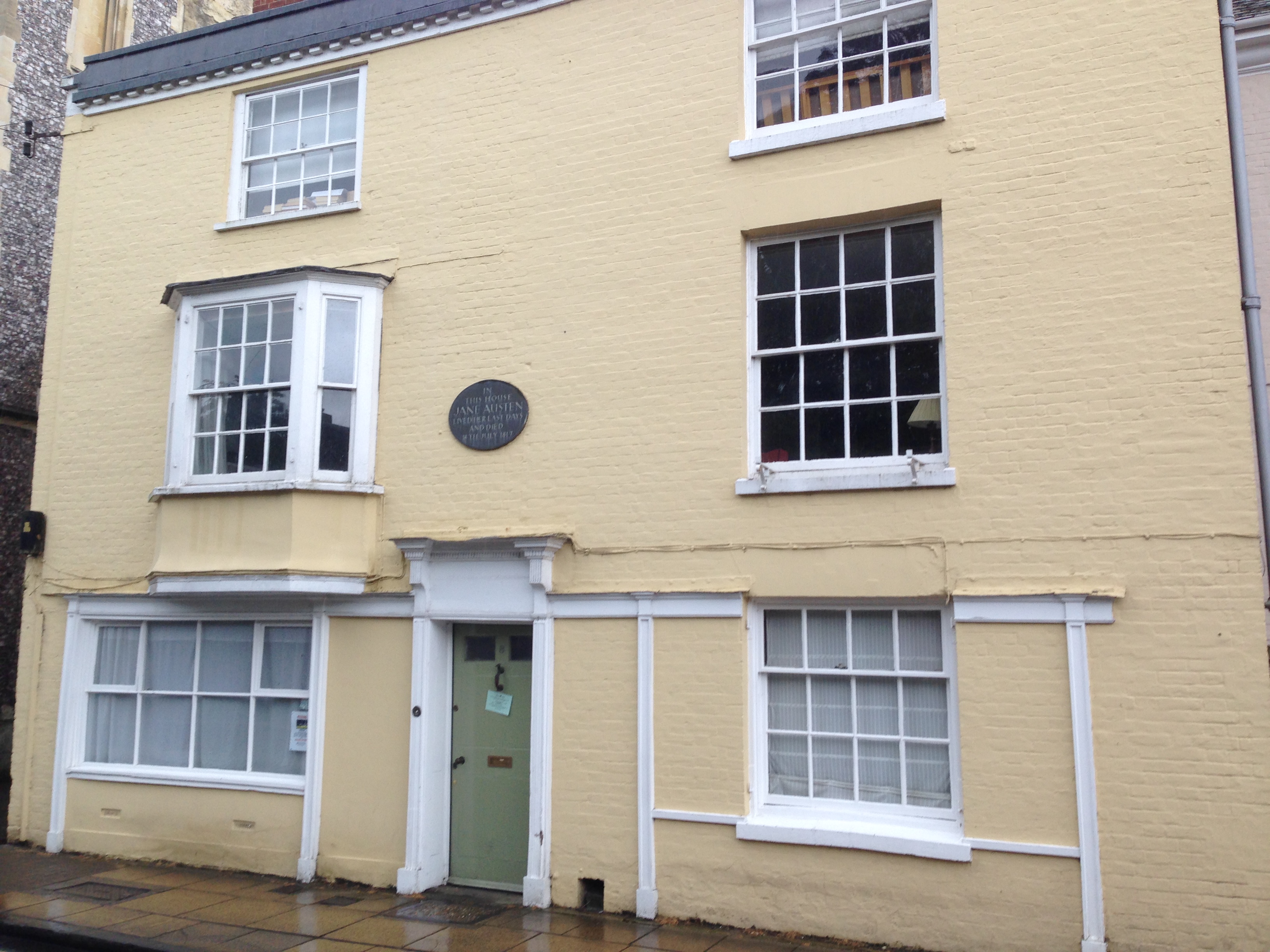
    After touring the cathedral, I walked my daughter a short ways behind to show her the house where Jane Austen died. We then walked to the library for the Mysterious Miss Austen exhibit. For those interested, it’s not large, but confined to two rooms and free to the public. Jane’s pelisse is on display as well as the original watercolour painted by her sister Cassandra as well as several derivations of that work and another drawing I’d never seen before, but was not fond of. I’m sure I’m leaving things out, but those are the bits that stick out in my mind the most.

    House where Jane Austen died

    I was unsure if photography was allowed, and there was a very vigilant library employee watching everyone like a hawk, so I didn’t even try. I did find the exhibit to be nice, so if you’re in the area, definitely stop by.

    Unfortunately, we were limited in time, so my daughter and I hurried to M&S for a takeaway lunch and started our long drive home. Thank goodness the M-25 wasn’t crazy with traffic!


    Links:

    The Mysterious Miss Austen

    Winchester Cathedral

    Share this:

    • Share
    • Tweet
    Like Loading…
  • Jane Austen Regency Week 2017

    June 27th, 2017

    I wish I could say that I was able to experience more than I did, but personal reasons interfered and I only managed two days of Jane Austen immersion this year. 😉 I understand from those present that the Regency Day was the best yet and that despite the heat, the ball was a success, which was nice to hear, though I was sorry to have missed both. I’m not too sure about dressing out Regency in the heat wave we had at that time, but the rest would have been fun.

    I arrived late afternoon on Monday the 19th and settled in, meeting up with good friend Cass Grafton, who arrived several days before. My first event was a talk by the well-known Jane Austen historian Diedre LeFaye, who spoke on Jane Austen’s life in Hampshire–primarily the places she lived and how they were depicted during her life and how the places or sites appear now. The talk was informative and the pictures were very interesting, especially of places I had visited.

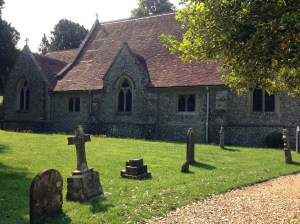
    St. Nicholas Church
    From within the churchyard

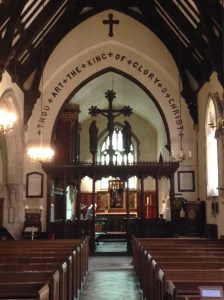
    Tuesday morning, my daughter and I walked out to Chawton and poked around St. Nicholas Church, which is near Chawton House and was the church associated with Edward Austen Knight’s estate. St. Nicholas was originally built sometime around 1270, though it was renovated and parts even re-built during the Victorian era. Most of the church was destroyed by fire in 1872 or 1873, but the chancel remained and is still part of the church that stands today. A plaque for Cassandra, Jane’s sister is still to the left of the altar and still retains scorch marks from the fire.

    Interior
    Scorch marks on Cassandra’s plaque

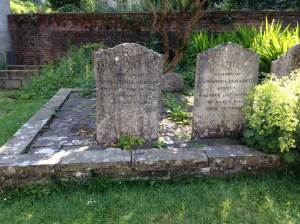
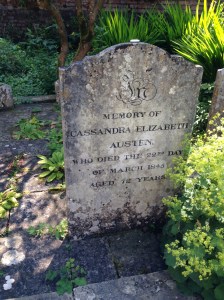
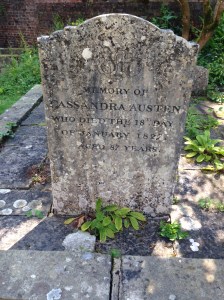
    Outside St. Nicholas Church, Jane Austen’s mother Cassandra and her sister Cassandra Elizabeth are buried behind the building and almost set apart with how they are arranged.

    Both graves
    Her sister Cassandra
    Her mother Cassandra

    Tuesday afternoon, we attended a talk by Gabrielle Malcolm on “Darcy then and now,” which was interesting in how she illustrated the sources and inspirations for Jane Austen’s masterpiece and then how it has created an archetype that has carried through to modern story telling and literature.

    That evening, Jane Austen House Museum held their annual open house. With the high temps, everyone walked through and after, a great many of the guests milled about in the gardens. We didn’t stay long, but walked through the house and then took the tour of the attics before heading off for dinner and to cool down.

    Book Bench in front of JAHM
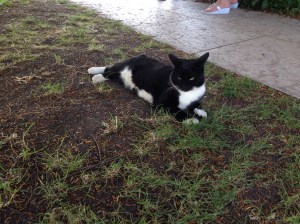
    Marmite, the grumpy Jane Austen’s House Museum cat

    Unfortunately, Wednesday meant it was time to travel home. My daughter and I did go into Winchester that morning, but I’ll save that for next week’s post. 🙂

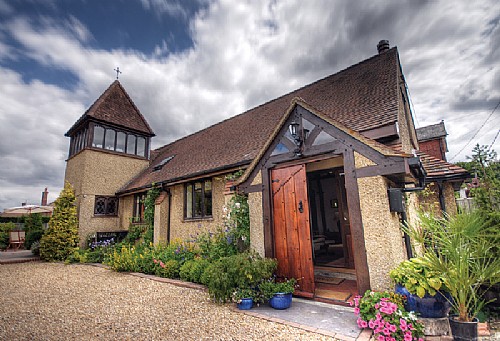
    Thanks to Joan at St. Mary’s Hall for the amazing place to stay. St. Mary’s Hall is located near The Butts and makes for an easy walk in one direction to Alton and in the other to Chawton. She is a wonderful hostess and definitely spoiled us! Maybe next year the weather will be more what we’re accustomed to!

    St. Mary’s Hall


    Share this:

    • Share
    • Tweet
    Like Loading…
  • Flatford

    June 6th, 2017

    I’ve been wanting to go to Flatford for some time. Run by the National Trust, Flatford is where the artist John Constable (1776-1837) painted approximately five of his works near the Flatford Mill. I happen to like Constable’s work and was intrigued by the gallery and the locations of his works. Along with the gallery and the scenery, Flatford also has the Bridge Cottage that people can tour as well as several walks and their tea room.

    John Constable was born in nearby East Bergholt. His father owned Flatford Mill and several others according to the information on the site. He eventually married Maria Bicknell and moved to London, leaving the family mills to be taken over by his younger brother upon the death of his father.

    Many of his works are set in Dedham Vale, which is the area surrounding Flatford, and represent a major contribution the Romantic movement of the time.

    Driving to Flatford isn’t difficult, by any means, but eventually you reach a one-way single road carriage way that leads you to the car park. The entrance is quite close and once you are inside, a RPSB wildlife garden and the gallery are the first attractions.

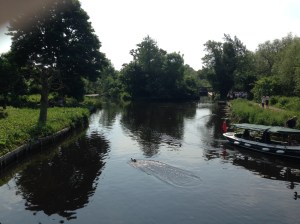
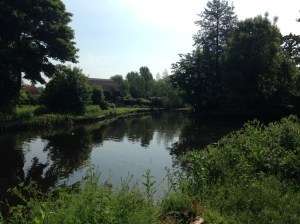
    View from the bridge
    Further down river near the mill

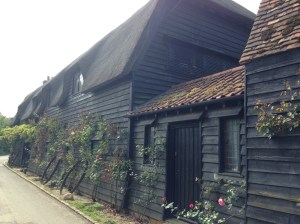
    Front of Flatford Mill
    Side of Flatford Mill

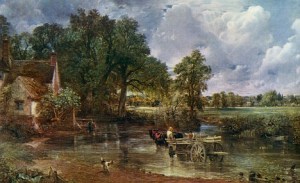
    We opted to view the exhibition first, which is a great deal of infographics and large prints of his work. We then toured the Bridge Cottage and crossed the bridge and took the walk down past the locks before we turned around and walked the other main trail that takes you past the Flatford Mill and the site of the famous painting “The Hay Wain” as well as several other cottages and buildings that existed in Constable’s day.

    The Hay Wain
    The View Now

    The site of “The Hay Wain” was fascinating by how much was actually the same from Constable’s day to ours. Obviously the trees are different, but the house to the side and so much is still the same.

    After, we stopped into the tea room for a lite bite to eat and something to drink. We usually love the tea room, but found this one had no gluten-free offerings unlike most of the other tea rooms, which was a bit of a disappointment.

    Our last stop was the RPSB Wildlife garden, that was full of colour, interesting, and beautiful, though I think the younger children enjoyed it more than us. It was still nice and had a great deal of educational bits on how to promote wildlife in your own garden.

    Flatford is a gorgeous area if you are keen on hiking some lovely trails and for scenery. Dogs were all over the property and a few had a ball swimming in the River Stour and playing as well, so if you enjoy bringing your dog, then it’s a great place for it. There are also boat tours and row boats to rent. My son wanted to do the rowboat, but I didn’t realise how much it would cost, so be warned there is a £10 deposit on a row boat and then it’s £5 per half-hour.

    Those who are interested in seeing Constable’s work might want to plan a trip to the National Gallery to see “The Hay Wain” or another gallery displaying his work since there isn’t any of that at Flatford.


    National Trust site on Flatford: https://www.nationaltrust.org.uk/flatford

    Share this:

    • Share
    • Tweet
    Like Loading…
←Previous Page
1 … 13 14 15 16 17 … 31
Next Page→

Blog at WordPress.com.

Loading Comments...
  • Subscribe Subscribed
    L.L. Diamond
    Join 258 other subscribers

    Have a WordPress.com account? Log in now.

  • L.L. Diamond
    View site in Reader
    Manage subscriptionsSign upLog in
    Report this content
    Collapse this bar
%d