Have you ever heard of Lavenham? If you’re not from the UK, you might not. I hadn’t until I was searching through the National Trust guidebook for places to take the family. Even then, a guildhall did not really interest me as I thought it might, so I continued to pass it over for other attractions until the Trust sent out an email chronicling places of interest from movies. So, what was so special about Lavenham? Well, the Guildhall is the basis for the Potter’s house in Godric’s Hollow.
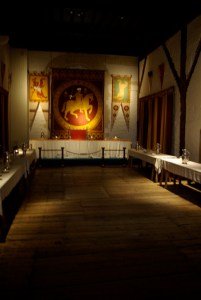
Lavenham Guildhall
The Potter’s House set (Harry Potter Studio Tour)
Yes, my family and I are huge Harry Potter fans, and once I found that tidbit out the Lavenham Guildhall was on the to see list.
For those who like me were unfamiliar with Lavenham, it was one of the wealthiest medieval villages in England with the Guildhall of Corpus Christi at its’ hub. The Guildhall was once believe to be several homes that were combined to form a centre for the Wool guild and eventually a meeting place for the town; however, because the foundation of the guild was based on religion, it was disbanded with the dissolution of the monasteries under Henry VIII and was later used as a prison and a workhouse.
Today many of the half-timbered homes in Lavenham remain crooked and leaning in some places into the streets. We walked around the town a bit just for the feel and enjoying the decent winter weather on the day we visited. The town is truly picturesque with the gently rolling hills that surround the quaint town. If it had not been for the cars and the modern clothes everyone wore, one could almost feel as though they stepped back in time.
We initially missed a turn to the Guildhall when we entered town, noticing the amazing church just along Lavenham’s edge, which we walked to once we had taken our time through the Guildhall and walking down a few of the small roads surrounding the town centre.
St. Peter and St. Paul’s Church was once probably a wooden church before it was built in stone in the 14th century. Like many of the cathedrals in England, it has been added to over the years, but none of the additions have detracted from the grandeur of this site. I think it reflects well the prosperity this community once had as it is such a grand church in a small village.
St. Peter and St. Paul’s Church
Interior
The exterior and interior of this building are just lovely and I found I enjoyed touring it as much as the Guildhall. The exterior has a great deal of Gothic detail to the architecture and I always enjoy the tall ceilings in the chapels. The columns and the different ceilings are all so interesting. Some have similar elements, but they are each unique in their own way.
Lavenham may not appear a great destination at first glimpse, but it is definitely worth an afternoon to walk around. I think I would enjoy returning in the late spring or early summer when everything is in bloom and it would be pleasant to take tea out of doors at one of the tea shops in town.
Origins of the city of Norwich were long ago. At the time of the Norman conquest, Norwich was already one of the largest towns in England with the Domesday Book (1066) mentioning it had twenty-five churches and a population of between five and ten thousand. The Normans changed the town by building the castle and then in 1096, beginning the cathedral.
As with many of these old English cathedrals, the construction was a long process and often only the beginning. The Norwich cathedral was completed in 1145 A.D and contains a combination of Gothic and Romanesque architecture–what they call ‘Norman architecture.” There have been additions and parts rebuilt since, but the original chapel still stands.
Entrance to Cathedral grounds
For such a large town, Norwich has a quaint, homey feel. We were unsure of parking near the cathedral, so we found a car park as close to the town centre as possible and walked the remainder (only about a mile). From the direction we approached, the cathedral grounds are surrounded by a wall. Once you enter the tunnel (be careful for cars!), the cathedral is just across a small green space.
The entirety of the complex is large, and part of it has been modernised to keep up with the times, but I loved how they added to the cathedral without harming the original structure. I passed through the cloisters to find the water closets, and they had added a glass wall with doors to one side of the cathedral wall, that wall becoming one side of the hallway. There were signs asking people not to touch the original stonework due to its age.
The cloisters and courtyard are amazing! I love the old arches and architecture.
Cloisters
courtyard
The inside of the cathedral was even more amazing! We travelled there to attend a Sunday morning
service near the Epiphany with a friend of mine. She was a part of a tour that journeyed to several churches and cathedrals around England for services and Evensong services. The service was beautiful! The choir was incredible and they have the most incredible pipe organ! The sound filled the interior of the chapel with ease. Going to services within such splendid surroundings was worth the trip in my opinion.
I have noticed these old churches and cathedrals are a bit draughty, most people wear their coats during services, but I didn’t notice the cold as much that day. I do not know if it was just so many people that the chapel was warmer, or if I was enjoying the service and architecture so much it was a distraction.
The vaulted ceiling is like a fan vault except it is called a Presbytery Vault. They’re difficult to make out in the picture (sorry!), but the small knots are actually sculptural elements. The parts going down the centre of the ceiling are representative of the books of the Bible in order with one larger, red element representing the parting of the Red Sea. Before the service and after, I would find myself staring. The ceiling is amazing and I’m sure a huge expense in maintenance.
(Each of these cathedrals has a huge bill for keeping these old structures in working order, and I’m certain with the high ceilings, to heat in the winter. This cathedral’s bill is a whopping £,4000 per day-that’s approximately $6,400 U.S. dollars/day!)
The stained glass windows in the Norwich cathedral are stunning, although I was told by my friend they do not date as far back as the chapel and were built and installed during the Victorian Era.
The Norwich cathedral is the second I’ve entered since arriving in England, and they’re worth the trip, in my opinion. One cannot but be impressed at the architecture and the artistry involved in these buildings-especially when you consider their age. The time involved in rendering the minutest of details is mind-boggling to me.
Cambridge is, of course, well-known due to Cambridge University and the various colleges scattered around town, but one might not realise the colleges have affiliated museums that are worth the effort to view if you are in the area.
Due to a spot of bad weather, we decided to make the drive down to see the Fitzwilliam Museum. The Fitzwilliam Museum is the arts and antiquities museum of the University of Cambridge, and the lead of the University of Cambridge museums consortium. A major perk–Admission is FREE! Yes, free.
As an art lover, I have gladly paid admission to art museums for the privilege of viewing the treasures within, but I was even more excited at the prospect of a free day at the museum. They do ask for a donation, and we gladly contributed to help with their costs.
The first time we came upon the Fitzwilliam Museum, we turned a corner in an attempt to find a car park and everyone in the car said, “whoa!” at the view. The exterior is a large and impressive Palladian influenced building with Corinthian columns, pilasters, and classical style pediment. It dwarfs every other building on the block with its size and architecture.
While the museum itself was founded in 1816, the initial building, completed in 1845, was called “The Founder’s Building” and designed by George Basevi and completed by C.R. Cockerell. The entrance hall was completed in 1875 by Edward Middleton Barry.
The view of the ceiling before you enter is beautiful and was an unexpected stop to gawk before I entered the door.
Exterior
Looking up on the Portico
Just after you enter, the hall is beautiful. A great dome (I wish my photo hadn’t been blurry!), stone columns, insets for statuary, and a large staircase are stunning and give a rich appearance in contrast to the simplicity of the colours in the remainder of the museum.
Upstairs in the Entry/Great Hall
We began our trek through the ancient art exhibit and worked our way through. While they were not extremely large exhibitions, the content made the displays impressive. We wended our way through Egypt, where we viewed several sarcophagi, a mummified kitten, and various stonework and hieroglyphs to Greece, featuring pottery from each period of Greek history, statuary, and coins.
One of my favourite parts had to be the Cycladic figurines. We went into an in-depth study in an art history class (Bronze Age in the Aegean) and to see not just one but two of the small white figures was awesome! They were also each from different time periods, which could be determined from their shapes and a few slight variations in their compositions.
Anyway! If you get me going on art, I could ramble on for days!
Illuminated Manuscript
Swords
At the time of our visit, the museum had several special exhibits, including one on Goya, a modern art exhibit featuring mannequins called Silent Partners, and an exhibit of prints by Caroline Watson and other female artists. (I hope to do another write-up on Caroline Watson sometime, so I won’t elaborate too much here!) Due to the children and the content of the exhibits, we did not tour the Goya or the Silent Partners exhibits, but I do recommend the Caroline Watson exhibition if it happens to travel to a gallery near you. It’s wonderful!
Over the course of a couple of hours, we rambled through the ancient art, medieval, weaponry and armour, the printmakers, and the Dutch masters before we decided to save the rest for a return trip. I could spend all day, but I have children, who after a time, decided they were hungry. There is something to be said for returning to fight another day rather than beating a dead horse!
I look forward to returning to the Fitzwilliam Museum, and if you happen to be in Cambridge and are looking for a day of fine art, then I highly recommend the experience!
(If you intend to visit and take photos, please consult the museum’s rules on photography. I was relegated to the use of my phone due to their regulations.)
Yes, the zoo! As much as I’d love to do nothing but a Jane Austen tour of the UK, my children would likely rebel!
Can’t escape something that reminds me of JA!
My husband had what was to him a great idea a few weeks back. We should go to the zoo! In the days prior, I did express some concern as to the weather forecast. While it was supposed to be a beautiful sunny day, the high where we live was 37ºF (3ºC). He insisted that the high was 40ºF at the zoo, and with the sun we should be fine. I will say it was still a bit cold for my taste!
Aside from the cold, the zoo is lovely. There is a stream that passes through the centre, lots of buildings where you can view the animals (It would have been nice to have some of them heated like in Nebraska!), and lots of animals. A few we could not see due to the cold and humidity. There was a great deal of condensation on some of the windows, especially with the large cats, but I would not expect any of the keepers to run inside to squeegee the glass so we could see.
One view of the stream
Giraffe’s indoor enclosure
The atmosphere is nice. There are snack places where you can get hot chocolate and other warm drinks, which was nice. My only complaint of the day was at lunch. I wish I’d brought myself more gluten-free options. I’ve been pretty lucky that most National Trust homes at least offer a soup with a gluten-free roll. Apparently, the zoo usually has a potato (I’m assuming baked potato, called a jacket potato here) because the kid asked about whether they had any. In the end, I had the usual choice of one soup with a gluten-free roll. I’ll just say that I’m not a big lentil fan!
Explanation of the clock tower
Probably once the church doors
One of the neatest parts was a ruin of an old church in the middle of the zoo. We had noticed a house covered in vines near the food court area, but hadn’t realised the house had been part of an estate that was on that land in the past. The ruins still had arched windows and supports in the tower. I think I must have been really excited when I saw it because we went with friends who chuckled as I snapped a bunch of photos.
So, the skinny if you decide to give the Colchester Zoo a shot. It’s nice and definitely worth seeing. Make sure you check the activities of the zoo because we didn’t realise there was an extra admission when we went. During Christmas, children can visit with Mother and Father Christmas, who give the child a gift and you can take a photo. It was a nice treat, but we weren’t prepared for how high the tickets were when we arrived. It was a bit of a shock. In the end, I’d recommend a warmer day, and if you do go during the Christmas season, I recommend Mother Christmas–she gives better gifts!
A few weeks ago, a friend and I ventured out to Wimpole Hall for my first English Christmas Craft Fair. I’ve heard fairs in some towns are larger, but I did enjoy this small event. I had wondered if the fair would be cancelled when it was foggy and wet that morning, but we swiftly discovered everything would continue as planned–They had brought in a tent to keep us and everything nice and dry.
The fair itself had a pretty good variety of merchandise and food products. Knitting, crafts, jewellery, bath products, homemade lace, cheese, and wines were a few of the stalls I can remember off of the top of my head.
The beautiful handmade lace was made by a gentleman on a Victorian style machine (You can see samples hanging behind him in the photo below). He also used a knitting machine from the same era to make some lovely delicate scarves.
The National trust also had stalls outside where they were making various crafty items using older methods of wood-working. We’d seen one of the methods before at Wicken Fen, but it was interesting seeing it used in new applications.
Unfortunately, the house was closed for the winter, so I cannot post much from the inside. There was a basement tour we opted to take since it was offered, which was something different.
We were warned upon entering that we could be snagged on walls and the floors were uneven due to the house not being in a ‘finished’ condition below the stairs. The basement is only available for a guided tour for £4 per person and not a part of the house open for the general public.
We began the tour in the lamp room, which isn’t a common room in most homes. They were usually somewhere on the grounds and not in the house due to the potential for fire as this was where the lamps were filled with oil.
The housekeeper at Wimpole had a lovely room with lots of storage, including the storeroom. Our guide was wonderful as he explained the ins and outs of the lives of servants from the housekeeper to the butler to the steward.
I cannot wait to return to see the upstairs of the house! We caught a glimpse or two up the stairs and it looked amazing!
I feel I do not have to give you any of the history of London since it is perhaps one of the most noted cities in the world. We had waited a while, acclimating ourselves to a new country, before we attempted to tackle a large city. In the end, it was not as difficult as I had imagined it would be. I will say a good sat nav (GPS) is not a bad idea. I suppose the best way to describe everything is to take it as we did. We did not take any tours, but instead just learned to navigate our way around while we took in some of London’s most famous sites.
We parked at one of the outermost tube stations-not the most popular as the parking was atrocious-but instead took one of the next stations where the parking was ample. Almost everywhere is pay and display in England, which means you pay at a machine located somewhere in the lot, and then place the ticket on your dashboard. Every lot has a time limit, fortunately, ours gave us until 2am. We didn’t need nearly that much time.
Our two youngest children were free when riding the tube, so we purchased three day passes (somewhere around £23 = $35), which would take us anywhere we wished to go for the entire day. We then took the next train in to London. We did have to change to another tube line. It isn’t as difficult as it may seem. There are maps of the entire tube system on every train, and in the tunnels leading to the trains there are breakdowns of what direction takes you to what stops. The tube stations were busy, so I did not take photos. Sorry!
We decided before venturing into town that we wished to see the poppies at the Tower of London before they were picked up on November 11 (Armistice Day), so our first stop was Tower Hill. Apparently, all of England had the same idea! We were delayed on our approach to the Tower Hill tube station twice before finally having the ability to disembark. We were then funnelled through the station in a massive crush. We did not even have to scan our passes when we left the station. It was too crowded and the authorities had opened the gates to allow everyone off.
Tower of London is, of course, mentioned in gobs of literature and referenced in many stories. It originally dates back to 1066 when William the Conqueror established the Tower to keep the “hostile Londoners at bay.” In 1536, Anne Boleyn was beheaded on Tower Green. Elizabeth I was imprisoned within the Tower. And, lastly, in 1605, Guy Fawkes was tortured in the Tower after his failed attempt to assassinate James I and Parliament using gunpowder to blow up the parliament building. The tower is known for all of these things as well as being the current location where one can see the Crown Jewels.
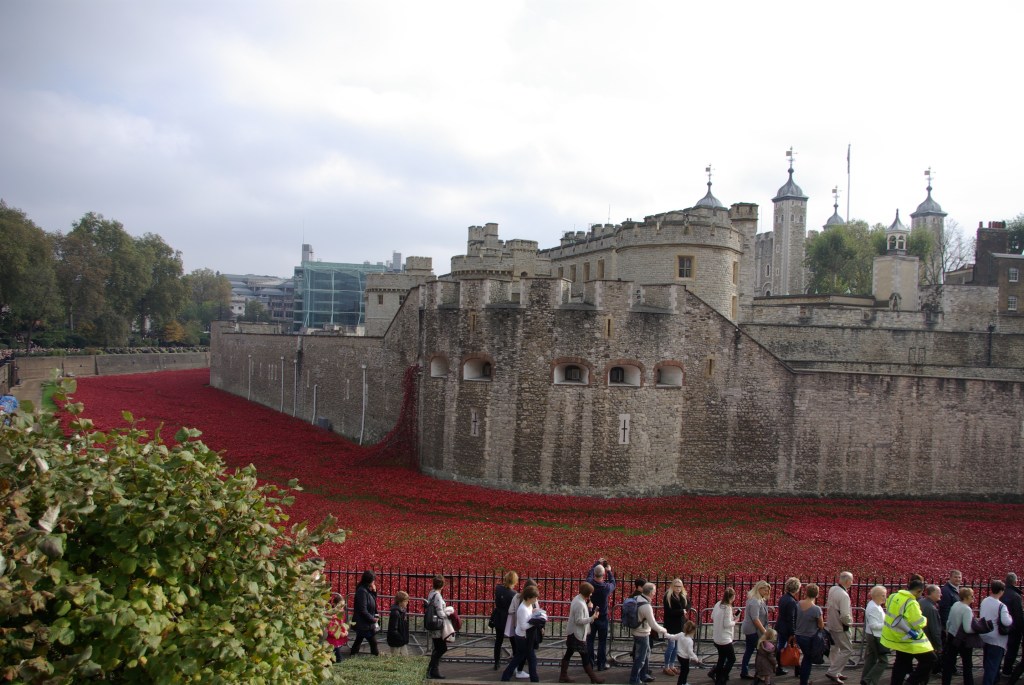
The tower, for the 100th anniversary of World War I has an amazing installation piece called Blood Swept Land and Seas of Red created by the ceramic artist Paul Cummins. 888,246 ceramic poppies were slowly added to the moat around the tower – one for every British and colonial soldier killed in World War I. Poppies are what the English wear for Remembrance Day, which is a lot like the holiday of Veterans Day in the U.S. Each poppy for this exhibit was made by hand and set out by volunteers. Each has already been sold, and after November 11, will be shipped off to the people who purchased them.
Tower of London
When you stand and take in exactly how many poppies there are, it is astounding. It is very humbling, and even my 9 year-old’s eyes bugged when she was told what each poppy represented.
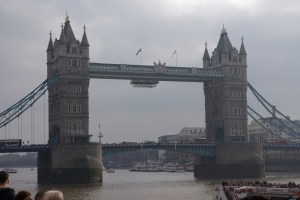
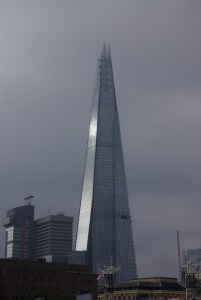
The lines to tour the Tower were atrocious, so we decided to walk. We initially walked up to St. Katherine’s Dock, where we ate lunch. Then we backtracked to the Tower of London Bridge. We crossed the bridge to Southwark. From the bridge, you have a great view of the buildings along the Thames, and the Shard.
Tower of London Bridge
The Shard
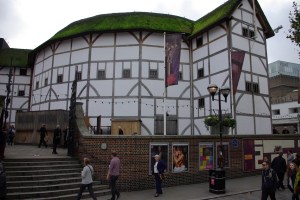
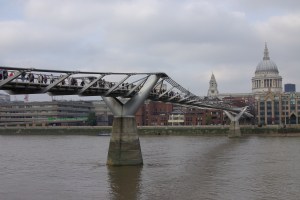
We continued along the Thames, passing a reproduction of the Golden Hinde, Sir Francis Drake’s ship that circumnavigated the globe, and Shakespeare’s Globe Theatre. The Globe is also a reproduction based on the 1599 and 1614 models of the site. The new Globe opened in 1997. We had been heading toward Westminster, but we forgot to turn toward a particular road we were supposed to take and stuck to the river front, happening upon the Millennium Bridge. This was the highlight of the day for my children. If you are a big Harry Potter fan, you will recognise this as the bridge the Death Eaters destroyed in the movie Half-Blood Prince. They all were very excited and insisted on crossing the Thames.
Shakespeare’s Globe Theatre
Millennium Bridge
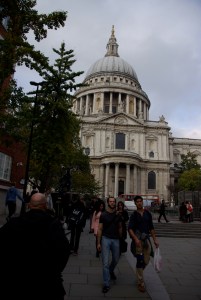
millennium Bridge crosses the Thames between the Tate Modern (which I completely missed!) and St. Paul’s Cathedral. I thought my children might be excited to see the cathedral from Mary Poppins, but they only reinforced my belief that I haven’t had them watch the movie enough. I was singing “Feed the birds, Tuppence a bag…” and they were telling me they didn’t remember the movie well enough. (*sigh*).
St. Pauls coming from Millennium bridge
Taken on the steps of the Cathedral
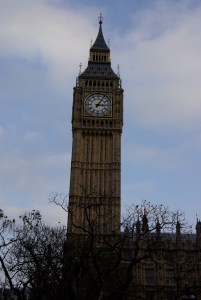
We did go inside the Cathedral briefly, but there is a tour and they do not allow photographs within the Cathedral. We hope to return to take the tour. The children had lost patience with walking by then, which is why we hunted down the nearest tube station to go to Westminster. It is really an incredible sight when you exit the station and immediately see Big Ben before you.
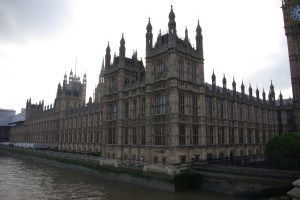
I studied the Parliament Building in a History of Architecture class my final semester in school. I was taken by the photos, and I was fascinated by it as we walked to see it. We had to go out on the bridge to really get a scope for the Gothic Revival building (My son must have been bored, because he took enjoyment in spitting in the Thames. *facepalm*). My husband is used to most of the gothic churches being built between 1200 and 1400, so I had to ask him when he thought the Parliament building was built. He was very incorrect.
Palace of Westminster (Parliament building)
Big Ben
As we were taught, the government required a larger Parliament building than the one they were using, so in the process of deciding to build a new one also decided the new home of Parliament should be a distinctly “English” architecture. As a result, they dictated the design should be Gothic or Tudor, which they felt to be the most English forms. Charles Barry and Augustus Pugin were the architects, Pugin being responsible for the addition of Big Ben, an iconic symbol of England and London. Barry was supposedly looked at the big picture or larger details of the building, while Pugin had the eye for detail. I will say the detail is amazing when you stand on Westminster bridge and examine this building. This exacting eye had a price in that Pugin went insane before the completion of the building around 1870.
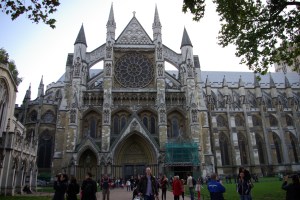
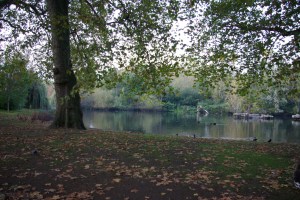
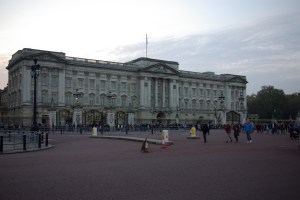
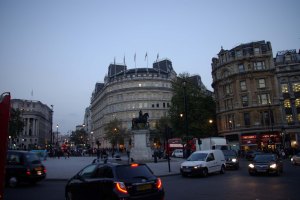
From the Parliament building, we began to walk. Stopping to sit outside of Westminster Abbey before venturing through St. James’ Park, which has a lovely walk along the pond. We walked past Buckingham Palace, and then up the road to Charing Cross Station where our day ended.
Westminster Abbey
St James Park
Buckingham Palace
Fortunately, we were able to bypass the Tower Hill tube station on our way back to our car! I had been informed earlier by someone working in one of the tube stations that Tower Hill had been closed numerous time that day because they could not handle the crowds!
Crazy Roundabout!
This roundabout made me glad we didn’t drive into London! I cringe to think of what parking would have entailed!
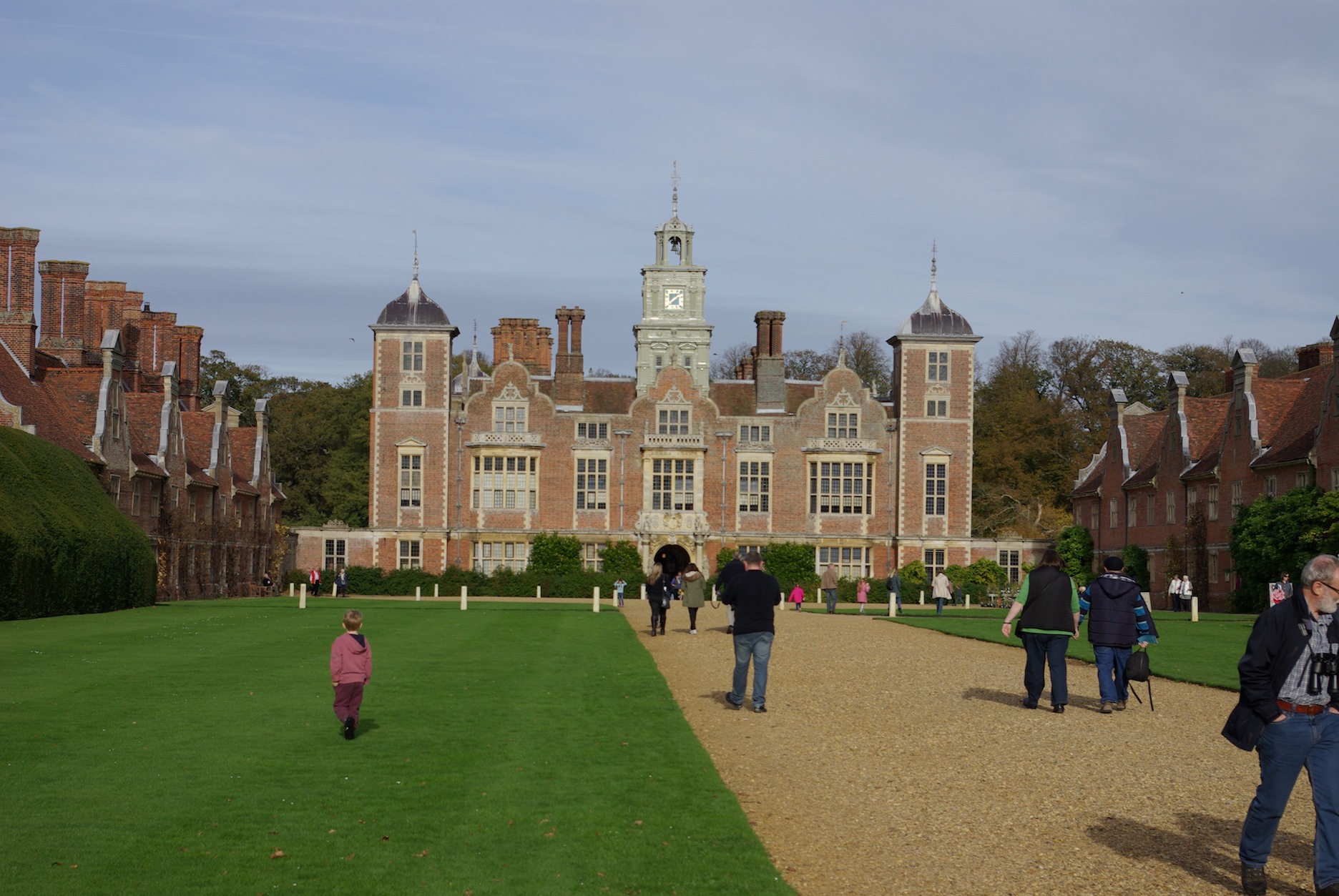
Blickling Hall in northern Norfolk can only be called fascinating. The property and house both have a long and notable history from the Boleyns to World War II. From the outside, it may seem much the same as many of the grand estates in England, but I must say that the National Trust workers who work there do help in making it an exceedingly interesting tour! I must say as far as National Trust guides, this house boasts some of the best–in my opinion at least.
Now, on to some of that history I was mentioning. Blickling Hall is built on what was once the estate of the Boleyn family. (If, for some reason, you aren’t aware of the Boleyns. Henry VIII, who founded the Church of England, wed Anne Boleyn in 1533 after the annulment of his marriage to Catharine of Aragon. Anne was later beheaded due to being found guilty of adultery, treason, and incest.) There is proof that the property was sold in 1459 to Geoffrey Boleyn. It is believed Anne was born at the home on the Blickling property and it is said that every year on the anniversary of her death, her headless ghost arrives at Blickling by a carriage driven by a headless driver and four headless horses. She roams the halls until daybreak.
It is also said that Anne’s father, Thomas Boleyn haunts Blickling. It was through his machinations that his daughter wed Henry VII. As a result, he lost his daughter and his son, so as his penance he is required to cross a dozen bridges before cockrow for a thousand years. He has a specific route that is from Blickling to Aylsham to Burg to Buxton Cotishall to Meyton to Oxnead and finally to Wroxham. Like Anne, he was also beheaded and the claim is his ghost carries his head under his arms with flame coming from his mouth, rather than blood.
The next name of note in regards to the property is Sir Henry Hobart, 1st Baronet, who purchased most of the Blickling property in 1596. He did not acquire the house until 1616 and for £5,500. Hobart then brought in Robert Lyminge as architect to build what now stands on the property as Blickling Hall.
Caroline Hobart, Lady Suffield, inherited Blickling in 1793 and lived at Blickling until her death in 1850. There is a room that houses the first editions of Pride and Prejudice and Sense and Sensibility that explain a great deal about Caroline and her elder sister, who was Lady Harriet. Their father John Hobart, the Earl of Buckinghamshire, had arranged Harriet’s marriage to one Earl, but she ran away with William Kerr, 6th Marquess of Lothian and was disinherited as a result, leaving Blickling to Lady Caroline.
Caroline is noted in much of the house due to her mark on Blickling. She brought in Humphry Repton and his eldest son John Gunton to redesign the gardens and reconstruct the central clock tower. She was also an avid book collector and according to information within the house was responsible for the collection of almost 900 books in the gallery (the name for the library at this home), which included three first edition Jane Austen’s (Pride and Prejudice, Sense and Sensibility, and a reticule sized Pride and Prejudice). Pride and Prejudice and Sense and Sensibility are on display under glass, but the reticule sized was hidden amongst the thousands of books in the gallery. I look forward to returning to see that particular volume!
Royal Air Force Oulton was a bomber base on a portion of the Blickling Estate. Created in 1939, it undertook work vital to the war effort before being closed for operations in 1946. It was decommissioned in 1949. There is a RAF Oulton Museum, but we did not have a chance to explore the museum.
There is also another ghost that is claimed to roam this old house. Sir John Fastolfe was a 15th Century knight on which Shakespeare based his character Falstaff has been seen throughout the old house. There have also been sightings of a “Grey Lady” floating through walls.
Most of the paranormal activity is claimed to occur around May 19, which is the anniversary of Anne Boleyn’s execution.
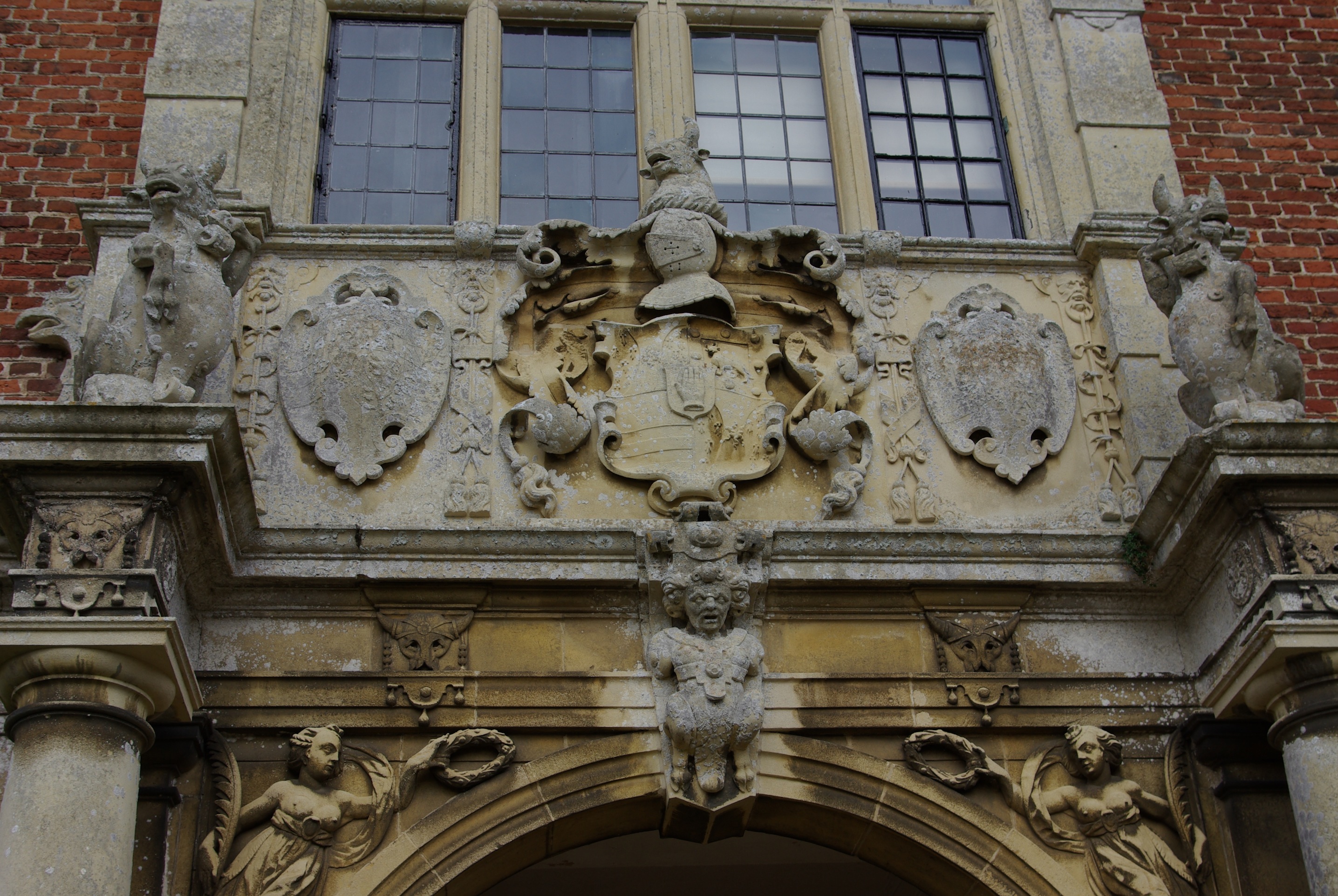
The house is huge, and ornately done, which seems common for Jacobean manor homes. There are sculptural and relief elements crests on the exterior of the home as well as ornately done fireplaces and ceilings on the interior. Upon entering, you find yourself in a large room with a great deal of wood paneling and the large staircase that splits to go up to each side of the upper floor.
The parlour appears to be a rather comfortably done room. There are lots of antiques, of course, but in these Jacobean homes, the ornate fireplaces and ceilings are what always seem to attract my attention. This one painted rather than an ornate plaster ceiling really attracted my notice. The last fireplace is located in a bedroom that was redecorated in 1767, and has true chinese silk wallpaper. They even have a portion under plexiglass that remains unfaded due to its location that is amazing to see.
The library, which is referred to as the “Gallery” by the staff at Blickling is probably the most impressive I have seen so far. The National Trust apparently had not even known what they had until they began cataloguing the contents recently. The library at Blickling boasts of three Jane Austen first editions (I know, I mentioned it before) and an Eliot bible, which was the first Bible printed in the United States in 1595. All one has to do is just look at the rows of books to see the age and value of this collection. They have found numerous first editions other than the Jane Austen’s and I think it would be interesting to see a catalogued list of the contents when the curator is done.
Unfortunately, the day we chose to visit was grey and it began to drizzle when we finally made our way to the grounds. I do not have many pictures of the grounds, but I do look forward to returning to see more of the grounds when we have a chance. The gardens look like they are beautiful in the summer and there are 50 acres in the park alone for people to wander. The entire property spans over 4,000 acres. We spotted one temple and I have seen pictures of the mausoleum Lady Caroline had built for her father.
Avid historians and ghost hunters should find common ground with Blickling Hall. It truly has a bit of something for everyone, I think; although, my oldest daughter missed not having any Greek or Roman style sculptures, so I might be mistaken.
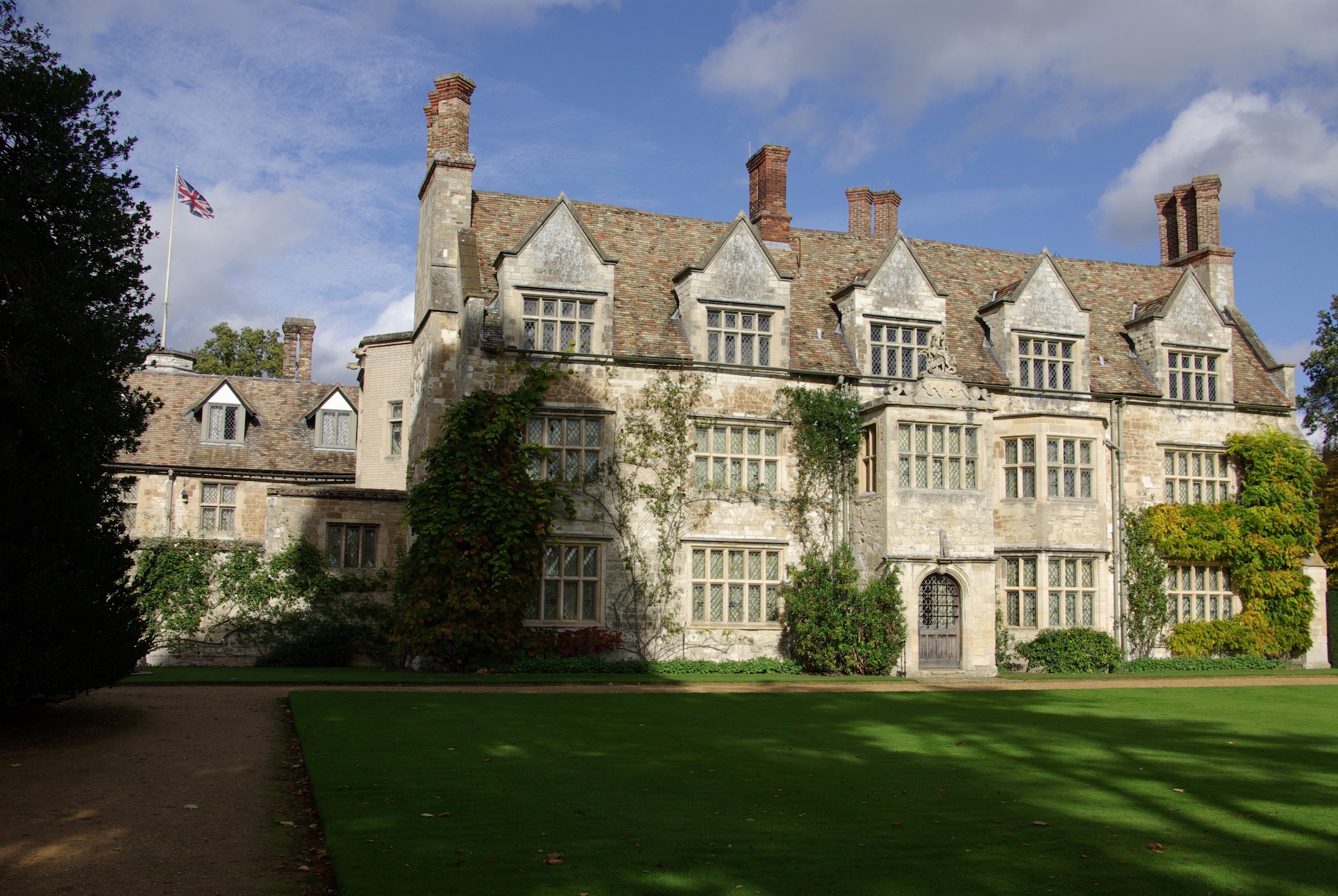
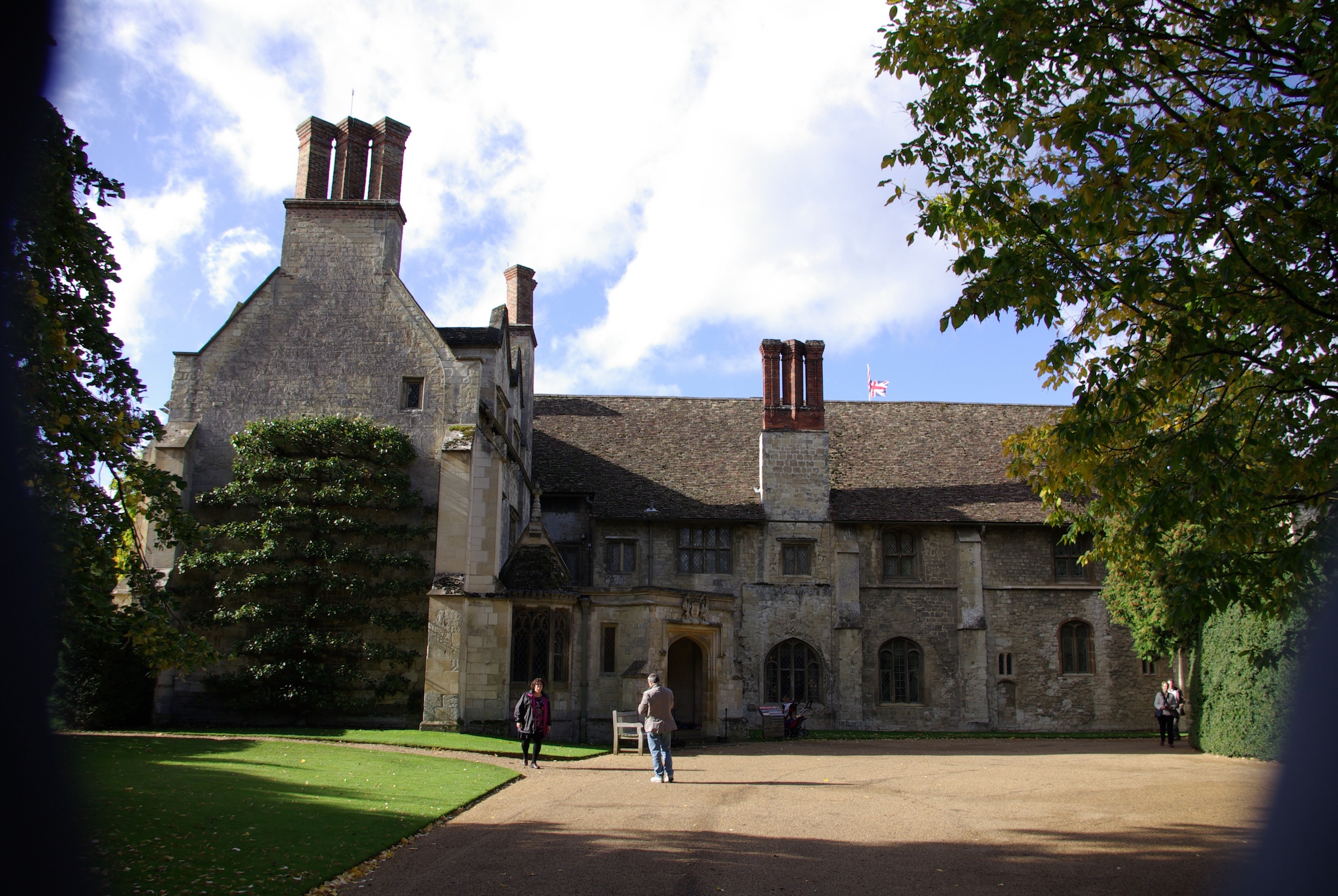
Anglesey Abbey is a Jacobean style manor house built on the site of a 12th century Augustinian priory located just north of Cambridge. What remained of the priory was purchased by Thomas Hobson around 1600 and was converted to a country home for his son-in-law.
Huttleston Broughton, who became the first Lord Fairhaven, purchased the home in 1926. Anglesey had fallen into disrepair, so Lord Fairhaven renovated the home and began to collect furniture, artworks and statuary. He never married, so when he passed in 1966, he left Anglesey to the National Trust.
Touring the home today, you can truly get a sense of Lord Fairhaven’s penchant for collecting works of art. There are tapestries hung throughout the home, and works from artists such as Claude Lorrain, John Constable, and Thomas Gainsborough. There are even some of the original arches from the 12th century priory that can be seen in the dining room of the home. The arches are lovely and give the room such an interesting feeling. (I apologize for the quality of the image. I had a hard time with how dark the dining room was. It either didn’t focus or was a bit blurry.)
At the moment, they are renovating some of the rooms and artwork, so two of the beds are moved into another room, and I am sure there might be a few prominent pieces of art that may be hidden away as they are restored. That was one of my complaints was all of the bedrooms of the were roped off at the door, and you can see that there are a few amazing pieces, but you cannot truly see the works or the plates that give you the artists name. There is a Constable that is immediately inside one of the doors, but the lighting is dim and the painting is dark. It makes it impossible to see it much less take a photo.
There are multiple libraries. There is a small library off the hallway where Lord Fairhaven’s bedroom is located as well as the main library with his desk and the bulk of the books. One National Trust volunteer claimed there were almost 4,500 books and another claimed between 7,000 and 8,000 books. I am not sure which is correct, but given the gentleman who claimed the higher number could tell you the number of animals in the artwork of the parlour to the number, I would imagine he is not mistaken.
My children and I enjoyed the kitchen and the servants areas. They are as they were in the 1930’s and there are even old bottles of food coloring and extracts that are interesting to view.
The exterior of the house is beautiful. I do truly think it is one of the most interesting exteriors I’ve seen. I enjoy the windows and the chimney pieces. It also fits in very well with the surrounding gardens.
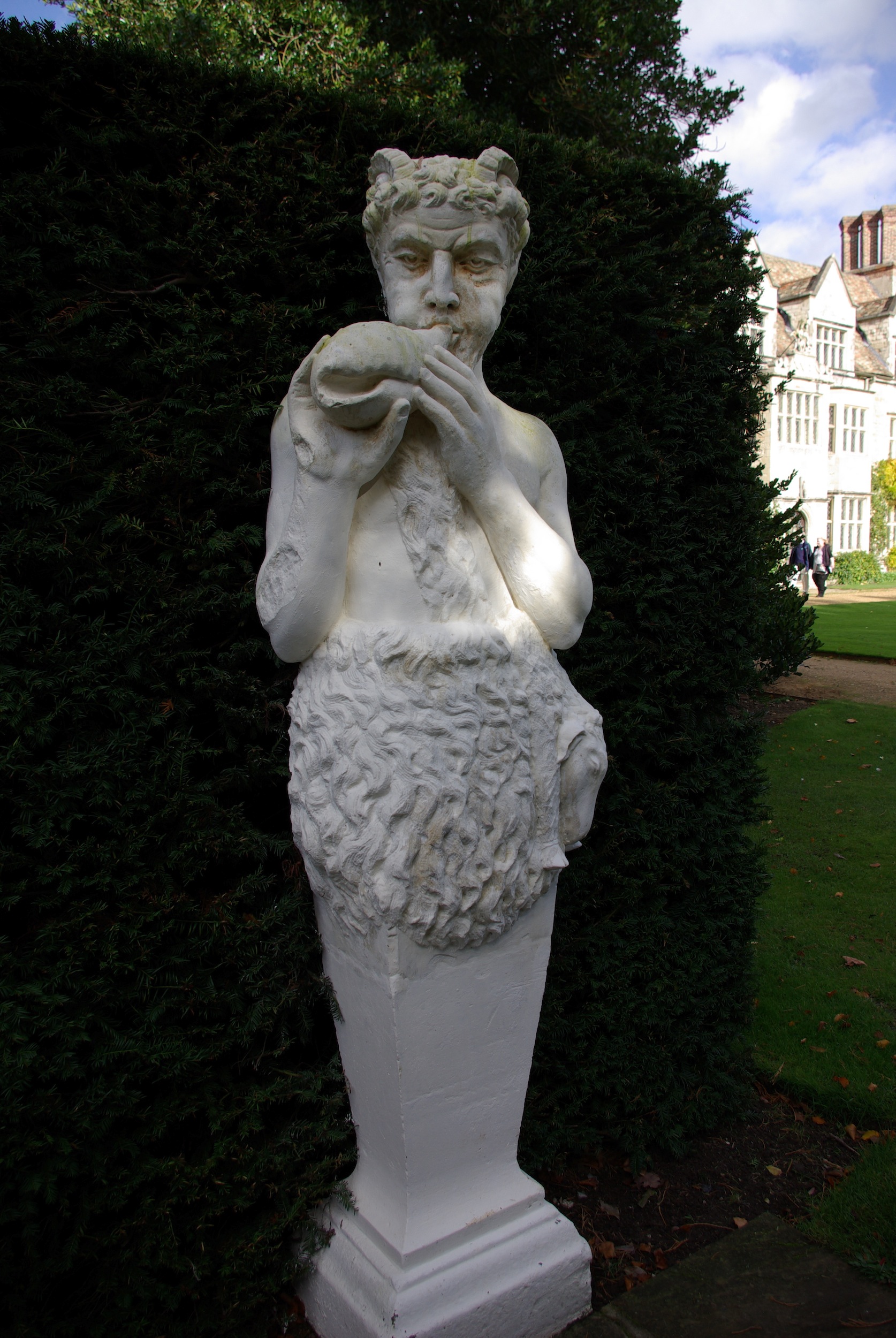
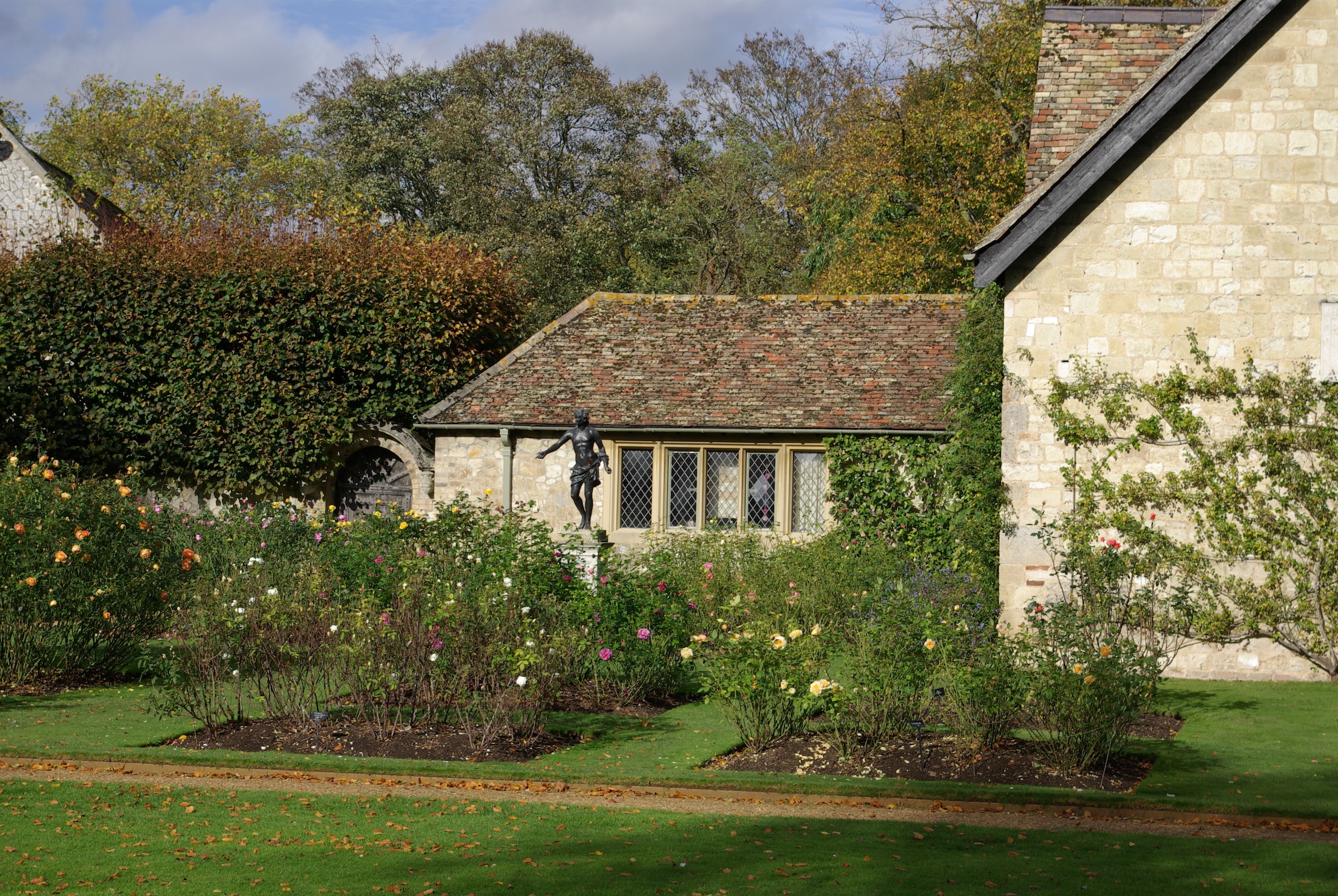
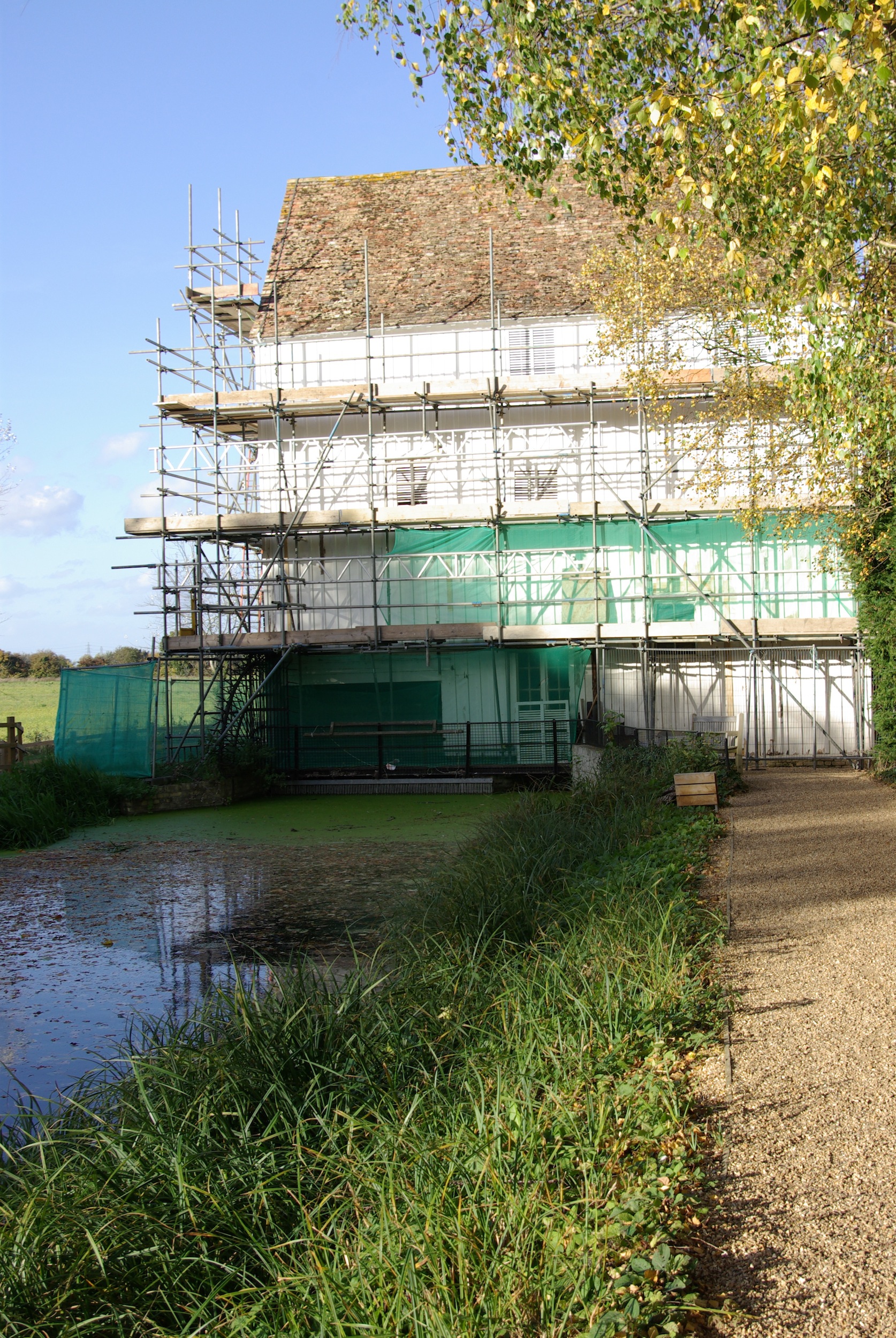
The Gardens! The gardens are stunning! Even in the fall! There seem to be gardens for just about every season with statuary scattered throughout the 114 acres of land. There is even a working mill.
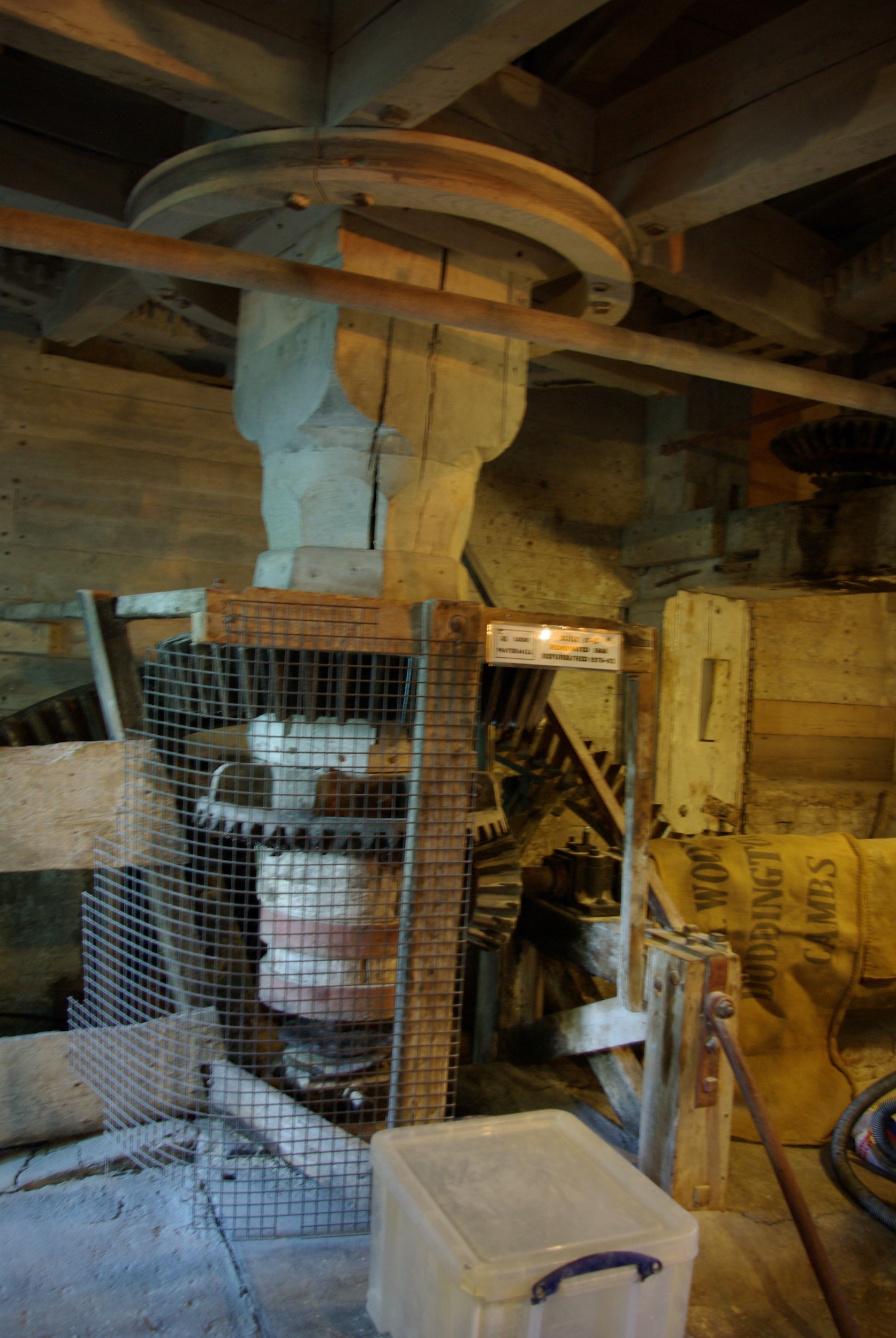
The exterior of the mill was under renovation, but the interior was extremely interesting. Beware the steep stairways/ladders to access the upper floors where there is a small threshing machine and the chutes where the grain flows down into the grinding stones. They still mill flour and oats, and even have smaller stones for children to turn and grind flour by hand. There are bags of flour and oatmeal for you to purchase at the mill and in the gift store before you leave.
When you work your way around the front of the house, there is a rose garden. I know I saw a Dahlia garden on the signs, and then there are the avenues and the winter garden. I know my feet and my children’s feet were a bit sore by the time we called it a day!
The photo I have labeled “The Main Tree-lined Avenue” is of a lovely avenue planted to commemorate the coronation of King George VI and Queen Elizabeth in 1937. It is a row of horse chestnuts, which copy a similar garden planted in Windsor Great Park. My children loved grabbing “conkers,” which are the actual horse chestnuts. I still have yet to discover how many made it home in their pockets, but I am sure they will turn up around the house eventually.
We loved exploring all of the trails and “avenues” and studying the sculptures. We began trying to guess who many of the sculptures were based on what they were holding or the implements with which they were depicted. Some were not that difficult if you are familiar with Greek or Roman mythology, others gave us quite a run for our money.
There is even a portion called Hoe Fen Trail. If you remember, I explained a fen in the post about Wicken Fen. This section is different than Wicken Fen, but is still a very natural area of the park and has a lot of activities and areas for children to play. Just beware the stinging nettles! They can be found throughout the park, but they were the most prevalent in this portion of the gardens.
I definitely think Anglesey Abbey is worth a day and based on photos I’ve seen, one day several times a year to see these amazing gardens in every season!
Anyone who has read Pride and Prejudice has heard of Ramsgate. It is, of course, the seaside town where Darcy set his 15-year-old sister, Georgiana, up with her own establishment. The move proves to be a tremendous mistake when he discovers his childhood friend and son of his father’s steward, George Wickham, follows her there and with the help of his sister’s companion, convinces Georgiana to elope. Darcy arrives just in time to save his sister from a man who was only after her dowry of £30,000.
Have you ever wondered what Ramsgate looks like. What have you imagined when you read Darcy’s letter to Elizabeth Bennet explaining Wickham and mentioning Ramsgate. As someone who has read Pride and Prejudice multiple times, I know I had a picture in my mind of the area, and it was nothing like what I discovered.
Ramsgate’s history goes back to 100 BCE with the arrival of a group of Belgic people, who were inhabitants of Gaul in those days. After, there were arrivals and invasions by the Romans and later the Vikings. Ramsgate’s earliest notation has it called Hraefn’s ate, meaning raven’s cliff gap, although, it later was called Remmesgate, Ramisgate, Ramesgate, and finally Ramsgate.
In the 14th Century it was known as a fishing village, but in 1483, it was adopted as a ‘limb’ of Sandwich and became a part of the Cinque Ports. During the early 18th century, Ramsgate went through a great deal of cleaning and renovation followed by a quite a bit of building. Georgian houses were built around the time Ramsgate became a busy garrison town and during Jane Austen’s time, it became a fashionable seaside resort. In fact, by 1815, the region was so popular that there were steamboats on the Thames that took people to Margate, Broadstairs, and Ramsgate, which are all located on the same small peninsula. There was even a train that connected these three towns so people could travel back and forth easily.
Restaurant in old train tunnel
Deal from the top of the sea wall
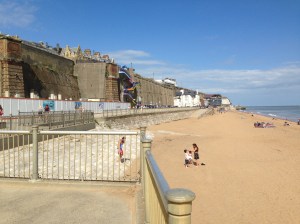
The first thing you cannot miss when arriving along the beach at Ramsgate is that there is a sea wall–a huge sea wall. Once you have parked along the seaside road, there are stairs that make the beach directly accessible. There is a roadway that takes you down to the water level, but there is very little parking and it is no doubt more expensive than parking and taking the stairs down. Ramsgate is a sand beach, unlike Deal, which is only a 20 minute drive. It is still a very obvious resort area as the small stretch of beach we were on had two areas with vendors that sold ice cream and had various other beach paraphernalia. There are no dogs allowed along the sand waterfront during the warmer months as well, which caused us to have to split time along the sand so someone was with our dog.
Beach view showing Seawall
Layla waiting with me at the beach
Driving around Ramsgate is really interesting. As we drove up one hill, I remember remarking to my husband that I felt as though I were in San Francisco. Many of the houses are townhouses and attached on both sides like many in San Francisco and there are a few steep hills. We also found homes that reminded us a bit of the French Quarter with their iron railings.
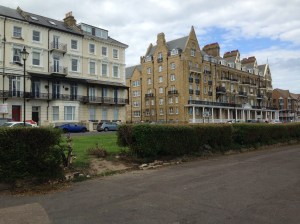
Buildings along sea wall
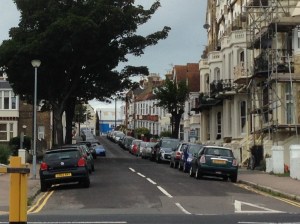
Looking up the street
I wish we had more time to explore as we had wished. There is also the Italianate Gardens, which is a large glass greenhouse that was built during the Georgian era, and is supposed to be a must see. I suppose despite the eye rolls I will undoubtedly receive, I will have to convince my family to return one day to see the gardens.
I apologize for the quality on some of the photos. My camera battery died on me within minutes of arriving. I took these photos with my phone.
Next up….I don’t know! Whatever we do this weekend?
Historical sources: http://www.ramsgate-society.org
ramsgatetown.org
Watkins, Susan, Jane Austen’s Town and Country Style, Rizzoli (1990)
The day we toured Dover Castle and saw the cliffs, we had spent the day working our way down about a fifteen minute drive of coast in Kent. We had toured Deal Castle in the morning, Walmer around lunch time, and our next stop had been Dover Castle. Now, Dover Castle is high up on a hill and there is a bit of a narrow road through the property to get there, including a traffic light that alternates car travel across a very narrow one lane bridge. My husband fussed at me because I was always rubbing one tire (or tyre as they spell it here) on the curb. He claimed he did not do it on our drive out, but I distinctly felt a tire rubbing the side!
According to the English Heritage website, Dover Castle has been protecting the English shores from invasion for over 20 centuries. Prior to the castle structure that we now tour, the site was home to an Iron Age Hill fort and a Roman lighthouse (I somehow missed this. Now, I want to go back!). After the Battle of Hastings, William the Conqueror converted the fort to a ‘Norman earthwork and timber stockaded castle.’ The site was then used continually until 1958.
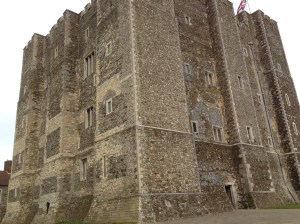
The castle that now stands was erected by King Henry II and his successors during the 11 and 12th centuries. Unlike the Tudor castles that we toured, Dover has a ‘Great Tower’ that was a ‘palace for royal ceremony and to house Henry’s travelling court’ and that is exactly what English Heritage gives you.
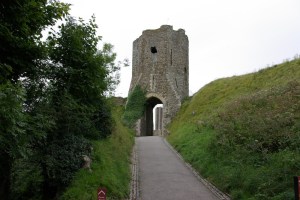
Entering the front gate, you then walk up through another walled entrance with a drawbridge that protects the Great Tower. The outbuildings are various museums, a gift shop, and a cafe, but the Great Tower that still stands in the center has been recreated to show visitors what it might have looked like just after completion when the court of Henry II received visitor Count Philip of Flanders, in 1184. There are actors portraying the parts, holograms in certain rooms (There is one in the larder of men doing inventory), and things are set up to be walked through and explored. The actors even rope the children into being knights of the realm in a ceremony.
(Some of the interior pictures were difficult to take without being blurry. There is not a great deal of light, so I apologize for the quality on a few of the images.)
First entrance
The Great Tower
Recreated room
We went up the entire tower, which is by winding staircase, so make sure you have been doing your stairmaster! In fact, the staircases bring you all over and through lots of long corridors, and even all the way to the roof of the Tower where you can enjoy amazing views of Dover, including the port, and the surrounding countryside.
View from Roof
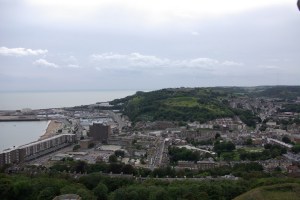
Roof top view of Dover
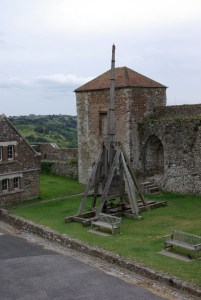
After making our way through the entire Great Tower, we exited out another gate with a drawbridge. One of the first things we noticed upon exiting this gate was the enormous catapult that was standing outside. As my family was checking that out, I began noticing the plaques on many of the buildings. These all tell you the names or uses of the building and when it was built. It is amazing to see buildings from as far back as the 12th century to as new as the mid-20th century, which shows how long this fortress was used as a defensive point.
Drawbridge
View back to the gate
Catapult!
There are underground tunnels that take you into the cliffs and an Underground Hospital. Unfortunately, by the time we walked down to where the Underground Hospital had been, it had closed, so I am sure for safety purposes the remainder of the tunnels had closed as well since it was nearing 5. I’m not sure about going into the tunnels as I am not huge on tight spaces, but it does sound really interesting. Dover Castle was an integral part of the battle and evacuation of Dunkirk when the France was being taken over by Germany in 1940, and these tunnels give you an example of what those days were like as well as how the tunnels were used for barracks and other missions.
Underground Hospital
Our last stop of the day was the White Cliffs National Trust. This site consists of trails and lookouts all along the cliffs. We parked and set off looking for a place to see the white chalk cliffs and take pictures. Truly, you do not have a long walk from the visitor’s center before you find a nice spot. There are two trails for this. One takes you down so that you can take pictures with the cliffs behind you and the other takes you above and you can take pictures looking down at the cliffs. I was a bit nervous because not all of the cliff edges have protective barriers, and I still have one rather young and impetuous child. We stuck to the upper trail which seemed to have a bit more as far as the barriers while my husband kept him close.
The views were beautiful. We could see France, the cliffs, Dover port, and we could also see Dover castle. Clouds had rolled in by the time we went to the cliffs so France was not as easily discernible in the distance, but if you really look, you can see it.
White Cliffs of Dover
The entire day was busy, but everyone had a great time. I have to say that Dover castle was my favorite of the three castles we toured that day. If you find you are in the area and must pick one, then tour Dover. It is easily be an all day event as well. There is so much to see and do at Dover, and because of time, we only scratched the surface. I will always recommend packing a lunch too. There are often places to picnic even if you bring your own blanket, and it is less expensive than eating in the cafe. I have enjoyed the cafes, but we sometimes pack a lunch, which is much more fun in my opinion. I also mentioned the stairs inside the Great Tower. The hills around Dover are steep and high, so they can also be a chore to climb if you are not accustomed to them. The cliffs were an uphill walk as well. It was a wake-up to how out of shape I have become, that is for sure!


 Today many of the half-timbered homes in Lavenham remain crooked and leaning in some places into the streets. We walked around the town a bit just for the feel and enjoying the decent winter weather on the day we visited. The town is truly picturesque with the gently rolling hills that surround the quaint town. If it had not been for the cars and the modern clothes everyone wore, one could almost feel as though they stepped back in time.