After the Colosseum and the Arch of Constantine, we checked out the lines for Palatine Hill. It was part of the admission for the Colosseum and we could see the ruins from outside and were definitely interested. We ended up having to go to lunch first. The lines were long before, but we hoped they might die down, which they did. By the time we were done eating, we had to simply show our ticket and walk through the gates.
Palatine Hill is the original site of Rome where mythology claims Romulus and Remus were found by the wolf Lupa and it is claimed Romulus built the sanctuary of the Curiae Veteres on one side of the city. This 131 foot plateau was the centre point of the Seven Hills of Rome and has a circumference of 5,700 feet. This site contains everything from prehistoric Roman ruins and later palaces and temples. It looks upon the Roman Forum on one side and Circus Maximus on the opposite and just a warning–bring your walking shoes!!
Evidence shows people have been living on Palatine Hill since the 10th century BC until the emperors made Palatine Hill their domain and built a series of palaces there. When the Roman Empire fell, Palatine Hill deteriorated until a stronghold was built in the Middle Ages. During the Renaissance, wealthy families built homes on Palatine Hill. Now, it’s an archeological site and still being excavated.
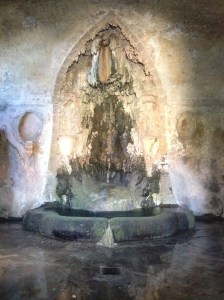
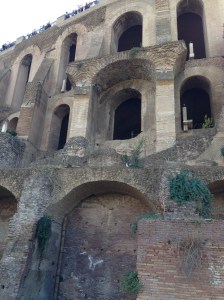
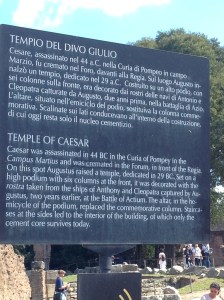
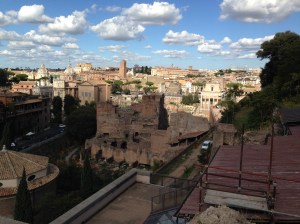
There’s just too much to Palatine Hill to go through it all and I know we didn’t even get to walk through all of it. It’s an entire day and maybe two if you are particularly thorough. The views from the top of the hill as well as the little bits that you find looking into some of the alcoves is worth every bit of it. It’s amazing to get a tiny glimpse of what existed here. Just by the ruins, you can see how amazing and fantastic much of it was.
Panorama of Palatine Hill from a higher vantage point
In 64AD after the fires in Rome, the Emperor Nero decided to build himself a palace that would be called The Golden House. Upon Nero’s death, Rome was engulfed in a civil war until Vespasian took the throne in 69AD. Instead of building a monument of palace for himself, he decided to build an amphitheatre for the people to enjoy, erecting it on the lake of Nero’s palace. Construction began in 72AD, but the huge structure wasn’t completed until 80AD when Vespasian’s son Titus was emperor. The finished structure was capable of holding 50,000 people, making it the largest of its kind in the Roman Empire.
Over the years, the Colosseum was plundered for multiple reasons–the wealthy as well as the popes wanted its travertine and marble for their buildings and robbers made holes in the walls looking for iron clamps. This continued until the church halted the destruction. They couldn’t completely destroy a building so rooted in Christian history, too many Christians became martyrs within its walls.
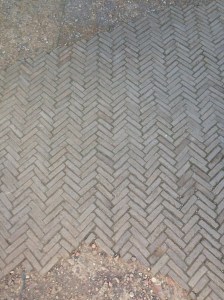
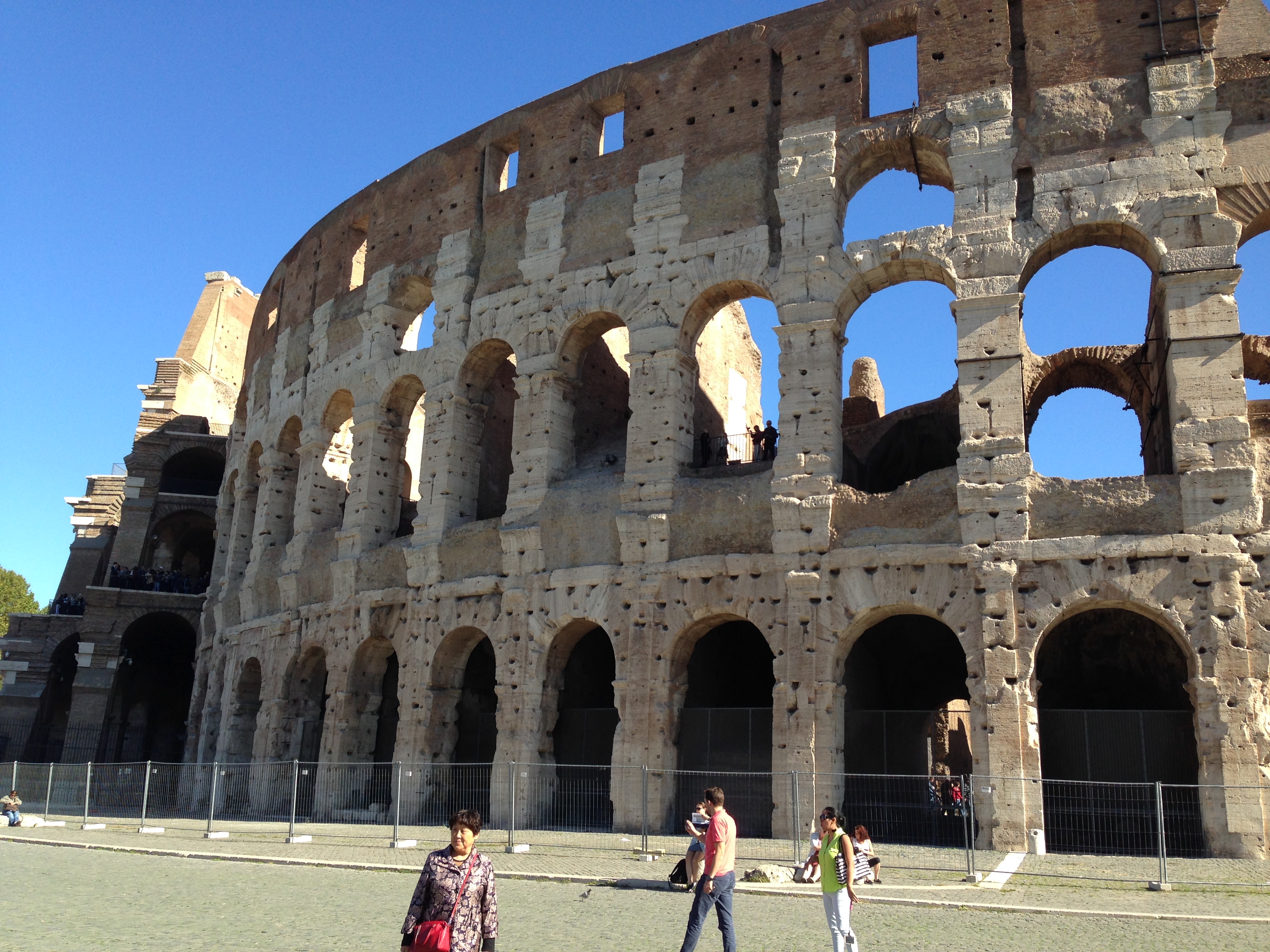
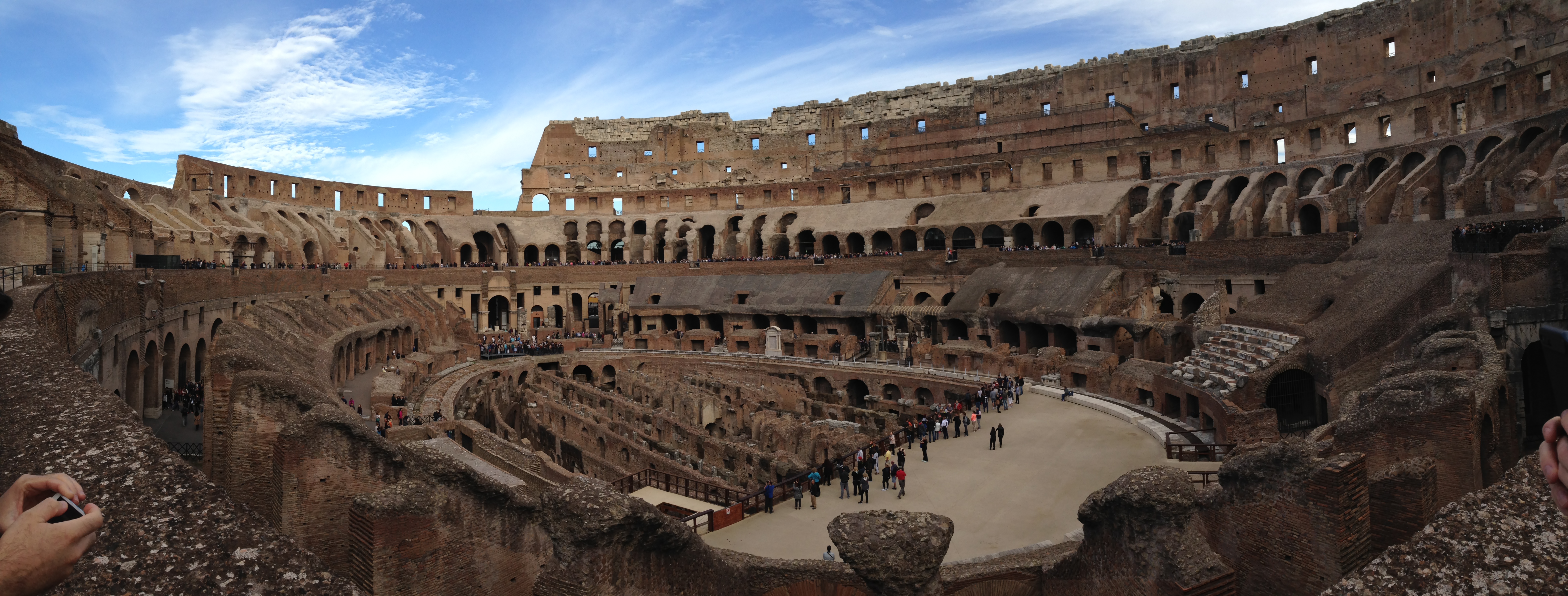
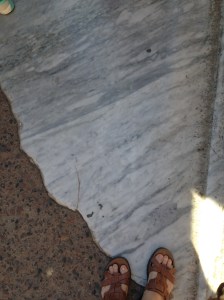
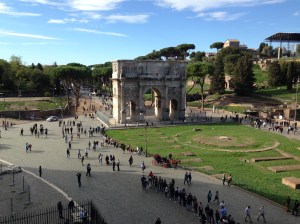
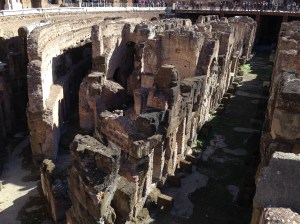
Today, we get a glimpse of what the Colosseum once was. It’s still huge when you approach, and when you stand at one end and look at the scale, it’s impressive. When you walk around, don’t just pay attention to the scale and the big picture or you’ll miss the little things. One one side, you can still see a hint of the rows that once existed, if you look at the floors where you walk, you will sometimes find a brick pattern or marble that was a part of the original flooring, there is also a great view of the Arch of Constantine from one side.
Part of the original flooring
Arch of Constantine
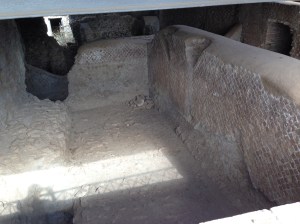
Lower level
A good portion of the Colosseum can be seen without paying for a private tour, however, if you want to go below into the catacomb portion, a tour and guide is required. We arrived as the place opened and were not a part of the tour, so we walked all over the upper levels that are accessible and took lots of pictures. Upon the approach to the Colosseum, you will have the same staggering of tour companies from a good mile to half-mile from the building, all trying to garner attention and extra money. One became angry with me and yelled at me because I told my husband to ignore her. After the Vatican, I was done with the tourist trap racket.
Whether you opt for a tour guide or not, the Colosseum is definitely a must see! Just make sure you look at the little things as well.
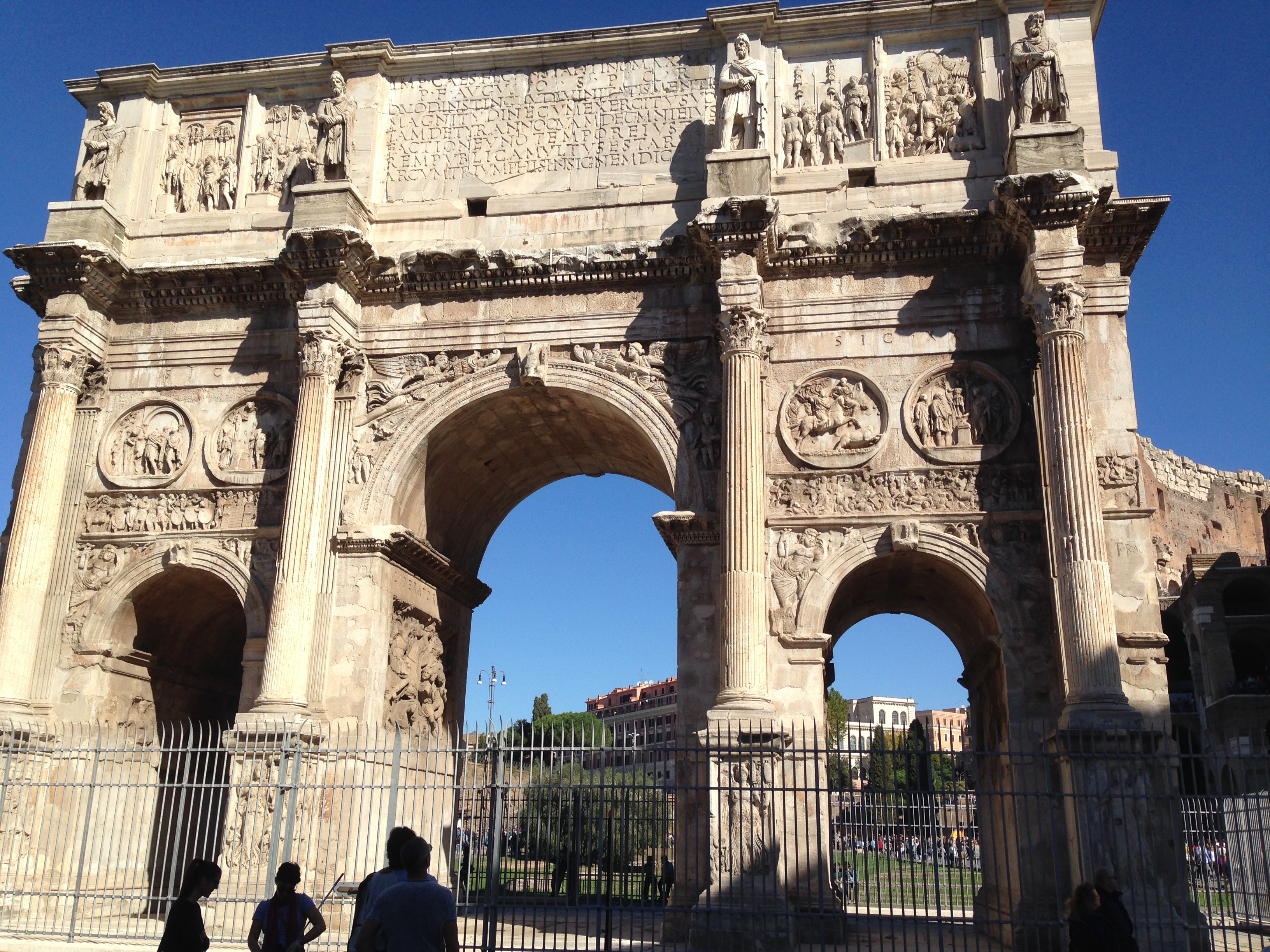
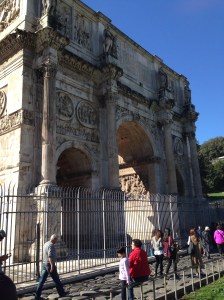
If you’re at the Colosseum, the Arch of Constantine can’t be missed since it’s right there beside the Colosseum. The Arch was built by the Senate and dedicated in 315AD as a commemoration of the emperor Constantine’s victory at Milvian Bridge in Rome over Maxentius for control over the western portion of the Roman Empire.
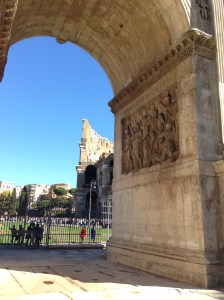
The Arch is huge and made of a grey and white marble, but was technically not all original at the time the Arch was built. The eight round medallions around the building have been dated to 200 years prior to Constantine and are actually from the emperor Hadrian’s reign, some of the rectangular reliefs come from an Arch built to celebrate the victories of Marcus Aurelius (the emperor was re-carved to look like Constantine), and there are also relief sculptures that came from Basilica Ulpia in Trajan’s Forum. Even the Corinthian Columns surrounding the Arch are from another monument that no longer exists.
Arch of Constantine
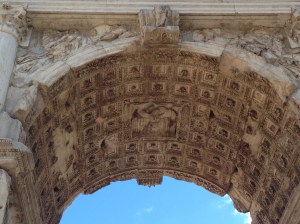
Inside the centre arch
Despite it’s less than original bits and pieces 😉 the Arch of Constantine is still amazing to see. There are sculptures within the arches as well as the many sculptures and columns on the outside. With the Colosseum in the background, it can also be a lot of fun to photograph. It made me wish I’d had my good camera instead of just my phone.
Coming up next… Palatine Hill and a wrap up of Rome